

QAL2 & AST CEMS Calibration UK
Build your quote in seconds — our team responds within 1 working hour.
Step 2: Added everything you need? Review your basket and send your request.
QAL2 is the EN 14181 parallel-measurement calibration of a Continuous Emissions Monitoring System (CEMS) against UKAS-accredited reference methods. QAL3 is the ongoing operator-led drift and precision control between calibrations. AST is the Annual Surveillance Test that confirms the QAL2 calibration remains valid. Alkali delivers the full EN 14181 cycle for UK environmental permit holders.
Read more about usShow
UKAS-accredited QAL2 and AST CEMS calibration to EN 14181 for IED, MCP, EfW and industrial operators — parallel reference-method measurements, calibration function derivation, QAL3 drift control and Annual Surveillance Test, delivered as fixed-fee scopes by UKAS Laboratory No. 24303. Available UK-wide across England, Wales, Scotland and Northern Ireland.
MCERTS stack testing with faster quoting and clearer reporting
Alkali helps operators move from permit condition to completed MCERTS report with less friction: online quote requests, fixed-fee scopes, early-booking discounts, automated reporting workflows and direct access to senior technical staff.
- UKAS Laboratory No. 24303
- MCERTS stack emissions testing
- Online quote requests
- Fixed-fee scopes
- Early-booking discounts for selected services booked at least two months in advance
- Automated Environment Agency-ready reporting
- Direct senior technical support
- Published accreditations and trust signals
- Standard
- EN 14181 (QAL1, QAL2, QAL3, AST)
- Regulator
- Environment Agency, SEPA, NRW, NIEA
- Accreditation
- UKAS Laboratory No. 24303 reference methods
- Report turnaround
- Typically 4–6 weeks from site work
- Typical fee
- Fixed-fee scope confirmed within one working day
- Coverage
- Nationwide UK
Compliance Confidence Included
Pre-submission review, regulator-ready documentation, and 14 days of post-submission query support are included as standard — to reduce refusal risk and enforcement delays.
QAL2 and QAL3 CEMS Calibration to EN 14181
QAL2 calibration is the parallel-measurement programme that calibrates a Continuous Emissions Monitoring System (CEMS) against UKAS-accredited reference methods, as required by EN 14181 for Industrial Emissions Directive (IED) installations, waste incinerators, large combustion plant and other permitted sites. QAL3 supports ongoing CEMS quality assurance through drift and precision control between formal calibrations. Alkali delivers the full EN 14181 quality assurance cycle — QAL2, QAL3 and Annual Surveillance Test (AST) — alongside MCERTS stack emissions testing and CEMS hire under one accredited framework.
What QAL2 and QAL3 mean under EN 14181
QAL2 establishes and calibrates the relationship between the CEMS and parallel reference measurements made using accredited manual stack methods, producing a calibration function and validity range that the CEMS uses to convert raw signals into reported emissions data. QAL3 is the routine operator-led quality assurance procedure that monitors CEMS zero and span performance and tracks drift and precision over time using control charts. Together, QAL2 and QAL3 provide the evidence base that CEMS data is suitable for compliance reporting under EN 14181 and the environmental permit.
When QAL2 is required
- New CEMS installation or commissioning
- Significant CEMS change, repair, replacement of major components or relocation
- Process or abatement changes that may affect the CEMS response
- Permit requirements that specify QAL2 frequency for the installation
- Where an Annual Surveillance Test indicates the calibration function is no longer valid
- Periodic regulatory requirements — typically every 5 years, or every 3 years for waste incinerators under IED Chapter IV, unless the permit specifies otherwise
How QAL3 supports ongoing CEMS quality assurance
- Routine zero and span checks at intervals defined in EN 14181 and the AMS manual
- Control charts (typically Shewhart or CUSUM) to track drift and precision over time
- Early detection of drift before it breaches the CEMS uncertainty budget
- Documented evidence of ongoing confidence in CEMS data for permit reporting
- Operator training and procedure design so QAL3 is repeatable and audit-ready
How AST, QAL2 and QAL3 relate
QAL2 sets the calibration function and validity range. QAL3 keeps that calibration honest day-to-day through drift and precision checks performed by the operator. AST is the formal annual check, carried out between QAL2s by an accredited test organisation, that uses five parallel reference-method measurements to confirm the QAL2 calibration is still valid. AST failure invalidates the existing QAL2 calibration and triggers an early QAL2. Together the three procedures form the EN 14181 quality assurance cycle for CEMS data used for environmental permit compliance.
What Alkali needs to scope QAL2/QAL3 support
- Environmental Permit and monitoring conditions
- CEMS make, model and configuration (analysers, sample handling, DAHS)
- Emission points and stack access arrangements
- Pollutants and supporting parameters in scope (NOx, SO2, CO, CO2, O2, dust, HCl, HF, TOC, NH3, Hg as applicable)
- Previous QAL2 and AST reports
- Monitoring schedule and any regulator correspondence
- Representative process operating regime and availability for parallel measurements
- Site access, safety and permit-to-work requirements
- Any reporting deadlines, including Environment Agency timelines
Related CEMS and stack services
QAL2 and QAL3 work is typically combined with CEMS hire during outages or abatement upgrades, periodic MCERTS stack emissions testing, Environment Agency reporting and, for combustion installations, Medium Combustion Plant permit support. To scope a programme, request a fixed-fee quote or discuss your permit requirements with a senior consultant.
EN 14181 quality assurance framework
EN 14181 sets a four-level hierarchy of quality assurance procedures for CEMS data used for environmental permit compliance. QAL1 confirms that the automated measuring system is suitable for the application before purchase, based on independent type-test data. QAL2 establishes the in-situ calibration function against UKAS-accredited standard reference method (SRM) measurements once the CEMS is installed. QAL3 keeps the calibration honest day-to-day through operator-led drift and precision control. AST is the annual independent check that the QAL2 calibration is still valid. Together they form the evidence base that CEMS-reported emissions are defensible to the Environment Agency, SEPA, NRW and NIEA.
What QAL2 involves in practice
- Parallel standard reference method (SRM) measurements alongside the CEMS over a representative operating range
- Derivation of the calibration function relating CEMS signal to SRM concentration, with its validity range
- Variability test comparing CEMS variability against the maximum permissible uncertainty for the pollutant
- Direct comparison of CEMS and SRM results, including handling of outliers and below-detection points
- Reporting outputs: calibration function, validity range, variability test result, permit-ready conclusion
- Evidence pack suitable for Environment Agency review and incorporation into permit compliance reporting
QAL3 ongoing quality assurance in practice
- Routine zero and span checks at intervals set in EN 14181 and the AMS manual
- Drift monitoring against control limits derived from QAL1 / QAL2 uncertainty data
- Control charts (Shewhart or CUSUM) to detect step-changes and slow drift
- Documented operator records giving ongoing confidence in CEMS data between calibrations
- Trigger thresholds for maintenance, re-calibration or early QAL2
What can cause QAL2 or AST problems
- CEMS drift between calibrations not detected by QAL3 in time
- Process instability during parallel measurements, so the SRM and CEMS see different conditions
- Poor sampling location — insufficient straight run, stratified flow or temperature gradients
- Incomplete historical data: missing operating logs, fuel records or abatement availability
- Weak maintenance records that cannot demonstrate analyser care between visits
- Process or abatement changes since the last QAL2 that shift the working range outside the calibration function
What is QAL2 calibration?
QAL2 calibration is the EN 14181 procedure that calibrates a CEMS against parallel measurements made with UKAS-accredited reference methods. A series of parallel runs establishes the calibration function and validity range, and a variability test confirms the CEMS uncertainty is within the required budget. QAL2 evidence underpins defensible CEMS reporting under the environmental permit.
What is QAL3?
QAL3 is the operator-led ongoing quality assurance procedure in EN 14181. It uses routine zero and span checks plotted on control charts to track CEMS drift and precision between formal calibrations, so problems are detected and corrected before they affect compliance data. QAL3 evidence is reviewed by regulators alongside QAL2 and AST results.
What is EN 14181?
EN 14181 is the European standard for the quality assurance of automated measuring systems (CEMS) used for emissions from stationary sources. It defines four procedures: QAL1 (suitability of the AMS), QAL2 (in-situ calibration against reference methods), QAL3 (ongoing drift and precision control by the operator) and AST (Annual Surveillance Test by an accredited organisation).
What is an Annual Surveillance Test?
An Annual Surveillance Test (AST) is the EN 14181 check carried out each year between QAL2s. An accredited test organisation performs five parallel measurements with reference methods to confirm the QAL2 calibration function is still valid and the CEMS variability is within the uncertainty budget. AST failure triggers an early QAL2.
What is a calibration function?
A calibration function is the mathematical relationship between the CEMS raw signal and the concentration measured by the parallel standard reference method during QAL2. It is applied by the CEMS to convert ongoing measurements into the values reported for environmental permit compliance. The function has a defined validity range — outside that range, CEMS data is no longer covered by the QAL2 evidence.
What is the QAL2 variability test?
The variability test is the EN 14181 check that compares the variability between the CEMS and the standard reference method against the maximum permissible uncertainty for the pollutant defined in the relevant directive (for example, the Industrial Emissions Directive). If the variability is within the budget, the CEMS is considered fit for compliance reporting; if not, the calibration is rejected and further action is required.
Frequently Asked Questions
What is QAL2 calibration?
QAL2 calibration is the EN 14181 parallel-measurement procedure that calibrates a CEMS against UKAS-accredited reference methods. It establishes the calibration function and validity range used by the CEMS to convert raw signals into reported emissions data, and is required for IED installations and other CEMS-permitted sites.
What is QAL3?
QAL3 is the operator-led ongoing quality assurance procedure in EN 14181. It uses routine zero and span checks plotted on Shewhart or CUSUM control charts to monitor CEMS drift and precision between formal calibrations, so deterioration is detected and corrected before it affects compliance data.
What is EN 14181?
EN 14181 is the European standard governing CEMS quality assurance for stationary source emissions. It sets out four procedures: QAL1 (suitability of the automated measuring system), QAL2 (in-situ calibration against reference methods), QAL3 (ongoing drift control by the operator) and AST (Annual Surveillance Test by an accredited body).
What is an Annual Surveillance Test?
An Annual Surveillance Test (AST) is the EN 14181 yearly check performed between QAL2s by an accredited test organisation. Five parallel measurements with reference methods confirm the QAL2 calibration function is still valid and the CEMS variability remains within the uncertainty budget. AST failure invalidates the calibration and triggers an early QAL2.
When is AST required?
AST is required every year that a CEMS is in use for compliance reporting, in each year between formal QAL2 calibrations. The Annual Surveillance Test schedule should be planned alongside the permit monitoring calendar to avoid gaps in valid CEMS data and to keep compliance reporting defensible.
How often is QAL2 required?
QAL2 is typically required every 5 years for most installations, or every 3 years for waste incinerators under IED Chapter IV. It is also required after significant CEMS change, repair, relocation or process change, and when an AST indicates the calibration function is no longer valid.
Can Alkali support both CEMS hire and QAL2/QAL3 work?
Yes. Alkali delivers CEMS hire, QAL2 calibration, AST surveillance and QAL3 control-chart design under one accredited framework, alongside MCERTS periodic stack emissions testing and Environment Agency reporting. Operators get a single, fixed-fee programme covering hire, calibration and ongoing CEMS quality assurance.
What is the difference between QAL2 and QAL3?
QAL2 is the formal in-situ calibration of a CEMS against UKAS-accredited reference methods, delivered by an accredited test organisation. QAL3 is the operator's ongoing daily or weekly drift and precision control using zero and span checks plotted on control charts. QAL2 sets the calibration; QAL3 keeps it under control between calibrations.
What is a calibration function?
A calibration function is the mathematical relationship derived during QAL2 between the CEMS raw signal and concentrations measured by the standard reference method. It has a defined validity range, and is used by the CEMS to convert ongoing measurements into compliance values reported to the Environment Agency under the environmental permit.
What is the QAL2 variability test?
The variability test is the EN 14181 check that compares the variability between the CEMS and the standard reference method against the maximum permissible uncertainty for the pollutant. If variability is within budget, the CEMS is accepted for compliance reporting; if not, the calibration is rejected and corrective action is required before a valid calibration can be issued.
What can cause a QAL2 or AST issue?
Common causes include undetected CEMS drift between calibrations, process instability during parallel measurements, poor sampling location, incomplete operating or maintenance records, and process or abatement changes that move the working range outside the existing calibration function. Most issues are mitigated by a structured QAL3 programme and pre-test scoping.
Is QAL2 delivered under UKAS accreditation?
Yes. Alkali's QAL2 and AST reference-method measurements are delivered under UKAS Laboratory No. 24303 ISO/IEC 17025 accreditation within the MCERTS framework. Accreditation status for the specific pollutants in scope is confirmed in writing before mobilisation.
Get a fixed-fee MCERTS stack testing quote online
Add the services you need, upload your permit conditions, and Alkali will review the scope and respond with a clear proposal — no phone tag, no email chains. A former Environment Agency officer reviews every brief for accuracy before pricing.
- Fixed-fee MCERTS scope
- Former EA officer review
- Response within one working day
Step 2: Added everything you need? Review your basket and send your request.
Online quoting reduces admin, avoids repeated emails, and helps operators get a faster, more accurate scope.
You May Also Need
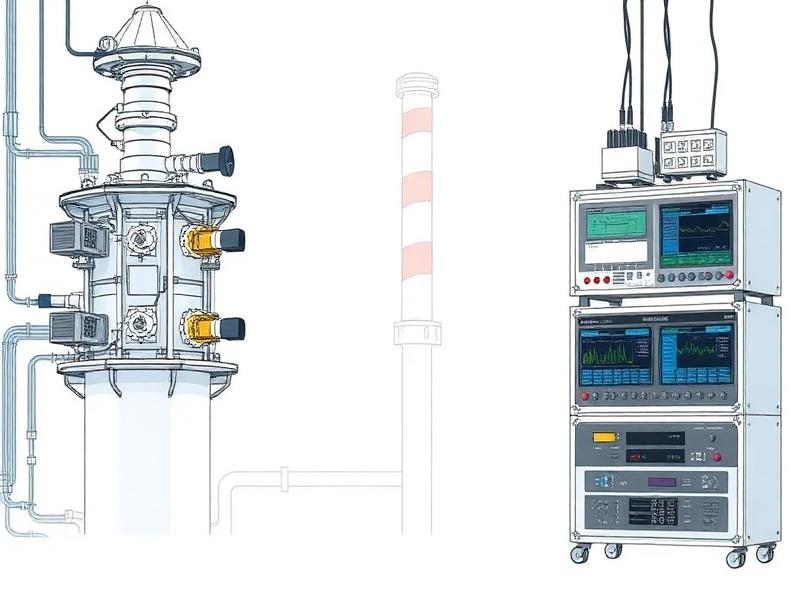
CEMS Hire UK – Continuous Emissions Monitoring

MCERTS Stack Emissions Testing UK | UKAS Lab 24303

Environment Agency Emissions Reporting UK

Operator Monitoring Assessment Support UK (OMA)
Services that often include QAL2 & AST CEMS Calibration UK:
Need a Quote for QAL2 & AST CEMS Calibration UK?
Add this service to your quote and submit a request. We'll review your scope and get back to you within 24 hours.
Step 2: Added everything you need? Review your basket and send your request.