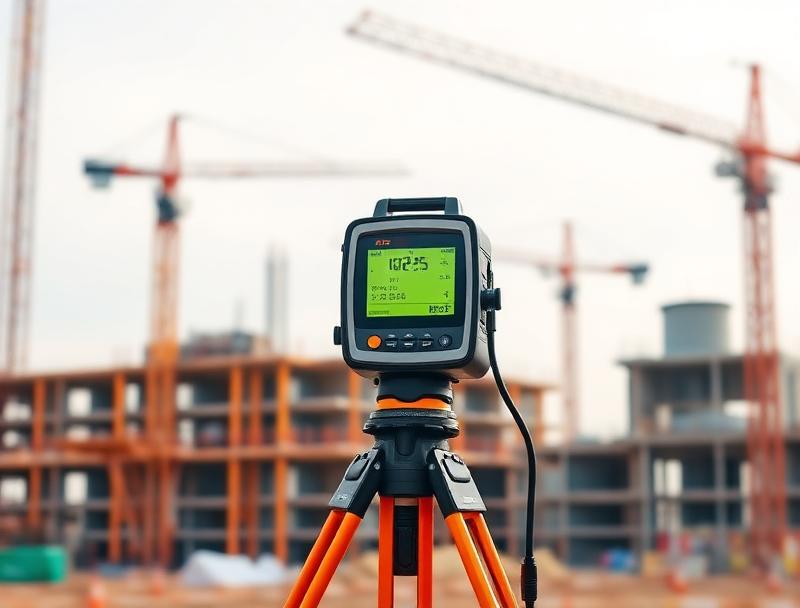
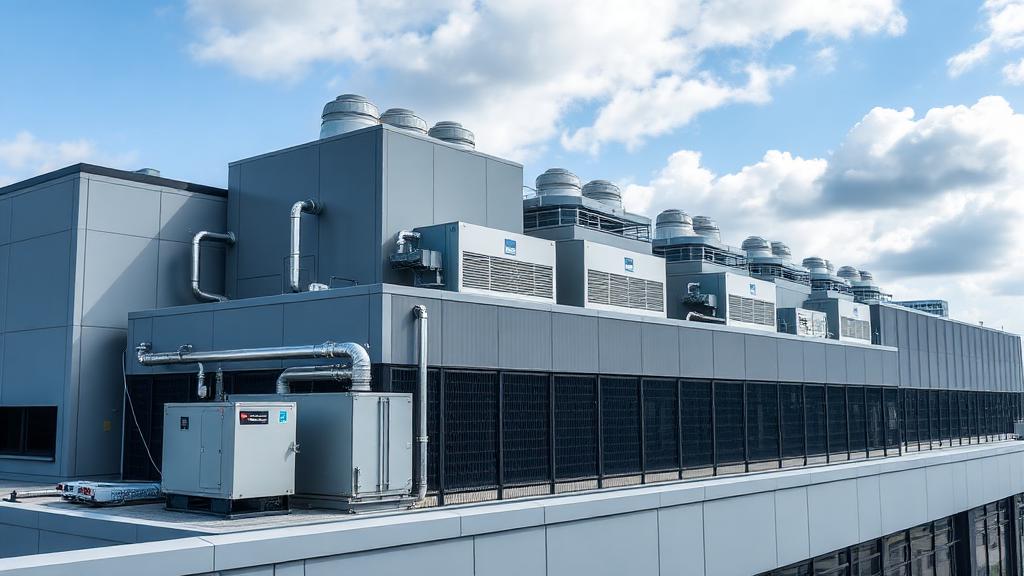
Air Quality Assessments evaluate potential air quality impacts of a development to support planning applications and demonstrate compliance with local and national policy. Alkali Environmental delivers Air Quality Assessments UK-wide across England, Wales, Scotland and Northern Ireland. Alkali tracks current UK guidance — including IAQM/EPUK Planning for Air Quality, Defra LAQM TG(22) and PG5/2(25) crematoria guidance — and delivers the air quality assessment evidence each one requires.
EPUK/IAQM Methodology
ADMS & AERMOD Modelling
LAQM.TG(22) Compliant
Planning & Permit Support
Construction Dust (IAQM)
In-House Monitoring
Air quality assessments in a nutshell
The short version for anyone whose planning application, permit or EIA has just come back with an air quality condition attached.
Why you need it
Local planning authorities and the Environment Agency refuse or stall schemes that cannot show their air quality impact is not significant. Under the Environment Act 2021 England now has statutory PM2.5 targets, and officers are applying EPUK/IAQM screening far more strictly than they were five years ago.
What we do
We screen the scheme against EPUK/IAQM criteria, run ADMS-Roads, ADMS 6 or AERMOD dispersion modelling where screening is failed, assess construction dust to IAQM methodology, and quantify impacts at every sensitive receptor and designated habitat.
What you get
A planning-ready assessment written to LAQM.TG(22) and IAQM guidance, with a defensible mitigation strategy, receptor-by-receptor impact descriptors, and wording your case officer can attach to a condition or Section 106 without further comment.
How it starts
Send the site address, red line boundary and trip generation or plant details. We confirm whether screening or full modelling is required and issue a fixed-fee scope, usually within one working day.
Air quality assessment readiness check
Eight questions your planning officer or the Environment Agency will effectively ask of your air quality evidence. Answer them here to see where your submission stands — nothing is sent anywhere.
1. Is the site within, or does it affect, a declared Air Quality Management Area?
An AQMA usually triggers a full assessment rather than screening, and commits you to demonstrating the scheme does not worsen exceedances of the annual mean NO₂ or PM10 objectives.
2. Do you know the change in traffic flows (AADT, HDV %) the development generates?
IAQM screening turns on traffic change: broadly 100 AADT inside an AQMA or 500 AADT elsewhere, with tighter thresholds for HDVs. Without agreed trip generation the assessment cannot be scoped.
3. Have sensitive receptors and designated habitats within the study area been identified?
Homes, schools, hospitals and care homes drive human health receptors; SSSIs, SACs and ancient woodland within 200 m of affected roads drive nitrogen deposition assessment.
4. Do you have a defensible local baseline, or only DEFRA background maps?
Background maps are often disputed by Environmental Health. Local diffusion tube data or short-term monitoring, bias-adjusted to LAQM.TG(22), is what survives scrutiny in marginal cases.
5. Will the scheme include combustion plant — CHP, boilers, generators or biomass?
Any abated or unabated stack requires point-source dispersion modelling and, for larger plant, may bring the scheme into the Medium Combustion Plant Directive or environmental permitting.
6. Is there a construction dust risk assessment following IAQM (2024) methodology?
Almost every major application now needs one. It sets the dust risk category and the mitigation that will be written into your CEMP or dust management plan condition.
7. Has suitability of the site for its own future occupiers been assessed?
Planning authorities increasingly ask whether new residents would be exposed above the objectives — which can drive ventilation strategy, façade design and layout, not just mitigation.
8. Is there a fixed committee or determination date the report must land before?
Modelling takes 3–4 weeks; baseline diffusion tube monitoring takes 3–6 months. Programmes have to be built backwards from committee, not forwards from instruction.
0 of 8 answered — 0 already in place. Complete the check for your readiness verdict.
Published timescales, cost drivers and what makes assessments fail
Most consultancies will not publish this. Here is what an air quality assessment actually takes, what moves the price, and the reasons planning officers send reports back.
Typical delivery timescales
Scope
Indicative timescale
Screening assessment (desk-based, IAQM criteria)
5–10 working days
Full AQA with ADMS-Roads traffic modelling
3–4 weeks from agreed inputs
Point-source modelling (CHP, boilers, generators)
3–4 weeks, longer with abatement scenarios
Construction dust risk assessment (IAQM)
5–10 working days
Baseline diffusion tube monitoring
3–6 months of data before reporting
What actually drives the fee
Cost driver
Why it matters
Number of affected road links and receptors
Model build and verification effort scales with the road network, not the site area.
Model verification data availability
Sparse local monitoring means extra work to derive a defensible adjustment factor.
Number of scenarios
Baseline, do-minimum, do-something and mitigated cases each add runs and reporting.
Habitats assessment
Nitrogen deposition at designated sites requires separate modelling and ecological interpretation.
Monitoring requirement
Diffusion tube surveys add consumables, laboratory analysis and site visits over months.
Six reasons planning officers send air quality reports back
Screening applied where the scheme clearly exceeds IAQM traffic thresholds, so no modelling was carried out at all.
Model verification omitted, or a verification factor applied without showing the local monitoring it derives from.
Sensitive receptors selected at the site boundary rather than at the façade of the nearest relevant exposure.
Nitrogen deposition at designated habitats within 200 m of affected roads not considered.
Mitigation listed generically ("dust will be suppressed") with no measures tied to the IAQM dust risk category.
Assessment against superseded objectives, ignoring Environment Act 2021 PM2.5 targets and WHO 2021 guideline comparison.
One consultancy from screening to post-consent monitoring
An air quality assessment rarely stands alone. Schemes usually need baseline monitoring to support the model, dispersion modelling for any stack, and accredited emissions testing once plant is commissioned. Alkali delivers all of it in-house.
Baseline evidence
Ambient air quality monitoring
NO₂ diffusion tube surveys and reference-equivalent PM10 and PM2.5 monitoring to establish the local baseline your model is verified against.
Accredited environmental consultancy for planning and compliance
Alkali gives operators, developers and project teams senior environmental consultancy support with fast online quoting, clear fixed-fee scopes, practical technical advice and regulator-ready reporting.
Pre-submission review, regulator-ready documentation, and 14 days of post-submission query support are included as standard — to reduce refusal risk and enforcement delays.
Air Quality Assessments for Planning, AQMA Sites and Environmental Compliance
Air Quality Assessments (AQA) provide planning-ready evidence on how a proposed development may affect local air quality and how future occupants may be exposed to pollution. Assessments typically focus on key pollutants such as NO2, PM10 and PM2.5, and are used to support planning decisions, reduce objections, and satisfy Environmental Health Officer and Local Authority requirements. A robust AQA combines baseline review, proportionate monitoring where needed, dispersion modelling, and clear mitigation recommendations aligned to EPUK / IAQM Planning for Air Quality guidance and local development plan policy. Alkali Environmental delivers Air Quality Assessments UK-wide across England, Wales, Scotland and Northern Ireland — add an Air Quality Assessment to the online quote basket, upload your site plan and planning brief, and a senior air-quality consultant returns a fixed-fee scope within 24 hours.
When an Air Quality Assessment Is Required
A development introduces new sensitive receptors near busy roads or emission sources
A scheme may generate additional traffic emissions or changes to vehicle movements
The site is within or near an Air Quality Management Area (AQMA)
Combustion plant, energy centres or generators may affect local air quality
Planning conditions require an assessment to demonstrate policy compliance
There is a need to demonstrate mitigation and exposure reduction (layout, ventilation, filtration)
Purpose of the Service
The purpose of an AQA is to reduce planning risk by providing clear, defensible answers to the questions planners and consultees ask: what changes, where are impacts, who is exposed, is it significant, and what mitigation is required? A good assessment avoids generic wording and focuses on the site-specific planning decision.
Scope and Methods (Modelling, Monitoring and Mitigation)
Baseline review using local authority and Defra/UK-AIR datasets and relevant nearby monitoring
Traffic and development emissions assessment including screening and significance testing
Dispersion modelling (where required) to predict NO2 and PM changes and assess exposure
Construction phase assessment where dust and emissions risk may be material
Mitigation including layout adjustments, ventilation and filtration strategy, and operational controls
What the Service Delivers
A planning-ready Air Quality Assessment report aligned to local authority expectations
Clear scope, methods, assumptions and limitations (transparent and defensible)
Modelled and/or monitored evidence where required to support conclusions
Mitigation recommendations that are practical, proportionate and condition-ready
Support for planning queries and stakeholder engagement where required
Who This Is For
Developers, planning consultants and architects preparing planning submissions
Projects near busy roads, AQMAs or other emission sources
Sites incorporating combustion plant, energy centres or logistical operations
Projects requiring clear exposure assessment and mitigation justification
An air quality assessment for planning applications provides Local Planning Authorities with the evidence required to determine whether a proposed development is acceptable in air quality terms. It addresses two questions: how the development affects local air quality (e.g. additional traffic emissions, combustion plant, construction dust) and how future occupants will be exposed to existing pollution. Reports are structured to satisfy EPUK & IAQM Planning for Air Quality Guidance and local development plan policies, with conclusions and mitigation written so planning officers and Environmental Health Officers can condition them directly. Where modelling is required, results are produced using ADMS air dispersion modelling.
What Pollutants Are Assessed: NO2, PM10, PM2.5, Dust and Other Relevant Pollutants
The pollutant suite is scoped to the development and its setting. Most planning AQAs assess nitrogen dioxide (NO2), particulate matter (PM10 and PM2.5) and construction dust. Combustion plant, energy centres and industrial processes may add SO2, CO, NOx as NO2, VOCs, metals or dioxins. Sites near road networks are dominated by NO2 and PM, while sites with biomass, CHP or backup generators require combustion-emission modelling. Construction phases are assessed separately for dust soiling, PM10 human-health and ecological risk using the IAQM construction dust framework — typically supported by PM10 construction dust monitoring.
Air Quality Management Areas (AQMAs) and Sensitive Receptors
An AQMA is an area declared by a local authority where national air quality objectives (most commonly the annual mean NO2 objective of 40 µg/m3) are exceeded or at risk of exceedance. Developments inside or adjacent to an AQMA receive heightened scrutiny and almost always require a detailed AQA. Sensitive receptors include residential properties, schools, hospitals, care homes, playgrounds and designated ecological sites. The assessment identifies worst-case receptor locations, predicts pollutant concentrations at each, and compares results against air quality objectives, EU limit values and ecological critical levels/loads.
Traffic Emissions, Combustion Plant and Development Impacts
Development impacts typically arise from one or more of: changes to vehicle movements on the local road network, new combustion plant (boilers, CHP, generators, biomass), industrial process emissions, or operational activity such as logistics and HGV manoeuvring. Traffic-derived impacts are screened using the EPUK/IAQM significance criteria and, where needed, modelled in ADMS-Roads with verified background and emission factor toolkit (EFT) inputs. Combustion plant is assessed against the H1 framework and, for installations 1–50 MWth, the Medium Combustion Plant Directive permit requirements.
Mitigation and Planning Condition Support
Where impacts are predicted to be significant, the AQA sets out proportionate mitigation that planners can condition. Typical measures include layout adjustments to move sensitive uses away from roadside façades, mechanical ventilation with filtration (G4+F7 minimum, often F7+activated carbon), low-NOx boiler specifications, electric vehicle charging provision, travel plans, and dust management plans for the construction phase. Mitigation is written to be specific, measurable and deliverable so it survives Section 106 negotiations and discharge of conditions.
Odour, Noise and Wider Environmental Considerations
Sites near sensitive receptors often require parallel assessments. Where odour is a planning concern (food production, waste, sewage, restaurants), an IAQM-compliant odour impact assessment runs alongside the AQA. Where noise is in scope, we coordinate with the noise impact assessment (BS 4142/BS 8233) so cumulative environmental effects are presented consistently.
What We Need From You to Quote an Air Quality Assessment
Site address, red-line boundary and proposed site layout
Description of the development (use class, unit counts, floor areas, operational profile)
Trip generation or transport assessment data (existing and proposed AADT)
Combustion plant details if any (fuel, rated thermal input, stack parameters)
Any local authority scoping correspondence or pre-application advice
Required submission date so we can confirm turnaround on a fixed-fee basis
Request a Fixed-Fee Air Quality Assessment Quote
We provide fixed-fee scopes for air quality assessments with regulator-ready reporting and direct access to the senior consultant running the work. Request a planning assessment quote and we will respond with a scoped fee, methodology summary and turnaround.
Frequently Asked Questions
Will an Air Quality Assessment be required for my planning application?
It depends on location, receptors, traffic change and local policy. A screening assessment can confirm whether a full AQA is needed and define scope.
Do you always need dispersion modelling?
Not always. Some projects can be scoped using screening and baseline evidence. Modelling is used where it is necessary to answer the planning question defensibly.
Can you advise on mitigation and layout changes?
Yes. A strong AQA includes practical mitigation (layout, ventilation, filtration, operational controls) that is deliverable and supports approval.
How do you reduce planning delays?
By scoping early, using guidance-aligned methods, and producing clear conclusions that match Local Authority expectations (not generic text).
Which air quality assessment method is most accurate?
Detailed dispersion modelling using ADMS or AERMOD with verified emissions data and validated meteorological inputs provides the most accurate assessment. However, accuracy depends on matching the method to the question: screening assessments are appropriate for low-risk sites, while detailed modelling with site-specific monitoring is used for complex schemes near AQMAs or where exposure is contested. We select the most defensible and proportionate method for each project.
What tools are necessary for air quality assessments?
Key tools include dispersion modelling software (ADMS-Roads, ADMS-5, AERMOD), continuous and diffusion tube monitoring equipment for baseline data, Defra UK-AIR and local authority monitoring datasets, traffic data analysis tools, GIS mapping for receptor identification, and emission factor databases (NAEI, EFT). We also use specialist ventilation and filtration assessment tools for exposure reduction design.
What is an air quality assessment?
An air quality assessment (AQA) is a technical report that predicts how a proposed development will affect local air quality and how future occupants will be exposed to existing pollution. It combines baseline data, dispersion modelling where required, and significance testing against UK air quality objectives (NO2, PM10, PM2.5) to support planning decisions and discharge of planning conditions.
When is an air quality assessment required for planning?
An air quality assessment is required when a development introduces sensitive receptors near busy roads, lies within or adjacent to an AQMA, generates significant new traffic, includes combustion plant such as boilers or generators, or where the local authority requests one in pre-application advice. The EPUK/IAQM significance criteria are used to confirm whether a full AQA or a screening assessment is appropriate.
What pollutants are assessed in an air quality assessment?
Most UK air quality assessments cover nitrogen dioxide (NO2), particulate matter (PM10 and PM2.5) and construction dust. Sites with combustion plant, industrial processes or biomass also assess SO2, CO, VOCs, NOx and where relevant metals or dioxins. Pollutants are selected based on the development's emission sources and the sensitivity of nearby receptors.
What is an AQMA?
An Air Quality Management Area (AQMA) is an area declared by a local authority where one or more national air quality objectives are exceeded or at risk of exceedance — most commonly the annual mean NO2 objective of 40 µg/m3. Developments inside or adjacent to an AQMA receive enhanced planning scrutiny and almost always require a detailed air quality assessment with dispersion modelling.
Can air quality mitigation support planning approval?
Yes. Practical, condition-ready mitigation — such as setting sensitive uses back from roadside façades, specifying mechanical ventilation with F7+carbon filtration, low-NOx combustion plant, EV charging provision and a construction dust management plan — can reduce a predicted significant impact to acceptable levels and is routinely used to secure planning approval.
How long does an air quality assessment take?
A screening or qualitative AQA can be turned around in 2-3 weeks. A detailed assessment with ADMS dispersion modelling typically takes 4-6 weeks once site, traffic and emissions inputs are confirmed. Baseline diffusion tube monitoring runs in parallel for 3-12 months where annualised NO2 data is required. We confirm turnaround on a fixed-fee basis when you add the assessment to the online quote basket.
Can Alkali support Air Quality Neutral and Air Quality Positive statements?
Yes. We prepare <a href='/air-quality-services/air-quality-neutral-assessment' class='text-primary underline hover:text-primary/80'>Air Quality Neutral and Air Quality Positive assessments</a> aligned to the London Plan and equivalent emerging policy elsewhere in the UK. These calculations sit alongside the main AQA and demonstrate emissions benchmarks for transport and buildings are met or bettered.
How much does an air quality assessment cost?
Fees depend on scope — screening assessments start lower, while detailed ADMS-modelled assessments with baseline monitoring sit in a higher band. Upload your site plan, development description and any pre-application correspondence to our online quote basket and a senior air-quality consultant will return a fixed-fee scope within 24 hours.
Do crematoria need an air quality assessment under PG5/2(25)?
Yes. PG5/2(25), published on 4 December 2025, expects the impact of emissions on local ambient air quality to be assessed whenever stack height and efflux velocity are determined — for new crematoria at application, and for existing crematoria at permit review. Assessments can use the Environment Agency's H1 software tool or full air dispersion modelling. Alkali delivers crematoria air quality assessments covering NOx, mercury, particulates, HCl and TOC, aligned with PG5/2(25) and IAQM guidance.
What does a PG5/2(25) crematorium air quality assessment cover?
It typically reviews baseline air quality, models process contributions from cremator stacks at nearby residential, ecological and amenity receptors, tests sensitivity to stack height and abatement performance, and compares predicted environmental concentrations against environmental assessment levels. The output supports permit review, replacement or retrofit of cremators, and any need for tighter NOx emission limit values highlighted by the new guidance.
Get environmental compliance quotes online
Skip the back-and-forth. Add the services you need, share your permit or scope, and Alkali responds with a clear, fixed-fee proposal — usually within one working day. Faster scoping, fewer emails, more accurate quotes.
Acute Exposure Guideline Levels (AEGLs) were developed by the US Environmental Protection Agency to evaluate the potential health impacts of accidental chemical releases into the air. They define concentration thresholds for three effect levels:
Approach
Alkali Consultants deployed their in-house AEGL specialist, applying ADMS dispersion modelling software to calculate NO₂ AEGL concentrations (ppm) at 40 sensitive receptors surrounding the proposed data centre. Close collaboration with the client ensured the EA's requirements were fully addressed at each stage. By combining international best practice with rigorous modelling, Alkali Consultants demonstrated the flexibility to meet regulatory demands beyond conventional UK frameworks.
Outcome
All five time-period objectives for NO₂ AEGLs were achieved.
Construction projects move at pace, and environmental requirements don't always come into focus at the start. A development team in the London Borough of Sutton approached Alkali Consultants with an urgent request: a Dust Management Plan (DMP) and automatic air quality monitoring needed to be installed within one week to satisfy planning conditions and allow construction to begin.
Approach
Mobilised within hours — secured monitoring equipment, identified suitable monitoring locations and scheduled a priority site visit.
Outcome
Full compliance with planning conditions from day one, with zero delay to the construction programme.