
20+
MCERTS Level 2 personnel & endorsements
MCERTS-certified Team Leaders and technical endorsement holders across manual stack methods, isokinetic sampling and CEMS assurance. Certificate numbers supplied in writing with every proposal.

Build your quote in seconds — our team responds within 1 working hour.
Step 2: Added everything you need? Review your basket and send your request.
Alkali is a UKAS-accredited stack emissions testing company (UKAS Lab 24303) delivering MCERTS periodic stack emissions monitoring, FTIR, isokinetic sampling, CEMS hire and QAL2 calibration across the UK — with fixed-fee scopes, 48-hour preliminary results and Environment Agency-ready reporting.
Alkali Environmental Consultants is an independent UK provider of UKAS-accredited MCERTS stack emissions testing, stack emissions monitoring, FTIR emissions monitoring, isokinetic sampling, CEMS hire, QAL2/QAL3 support and environmental permit compliance services. Alkali operates under UKAS Laboratory No. 24303 and provides UK-wide stack testing support for industrial operators, environmental permit holders, EfW, MCP, IED and manufacturing sites. Operators can request a stack testing quote online by uploading permit or process details. Alkali tracks current UK guidance — including PG5/2(25) crematoria guidance, MCPD, EA H1 and EN 14181 — and delivers every accredited monitoring requirement each one creates under UKAS Laboratory No. 24303.
Stack emissions testing measures what your chimney or flue actually releases, so you can prove to your regulator that you are inside your permit limits. Here is the short version.
Your environmental permit sets emission limits. The Environment Agency (or SEPA, NRW, NIEA) expects those limits to be proven by accredited stack testing — missing or non-accredited testing risks enforcement and a poor OMA score.
Our MCERTS-certified team comes to your site, samples your stack or flue under UKAS-accredited methods, and measures the pollutants your permit names — particulates, NOx, SO2, CO, VOCs, metals, acid gases, dioxins and more.
A regulator-ready report showing your results against permit limits, with preliminary results usually within 48 hours, pre-submission QA review and 14 days of post-report query support.
Send us your permit or a short description of the plant. We confirm the scope, issue a fixed-fee quote — usually within one working day — and book a testing date that fits your process.
Not sure what your permit requires? Talk it through with a consultant or call 0800 098 2610 — no obligation.
Eight questions that decide whether a stack emissions monitoring campaign can go ahead as planned. Answer them below for an instant readiness view — nothing is submitted or stored.
Answered "No" or "Not sure" to some? That's completely fine — we can still help. Most operators don't know all of this, and we work it out for you from your permit and site.
Your monitoring scope comes from the permit conditions, not from the plant type. Without it the campaign cannot be scoped correctly.
EN 15259 sets requirements for port diameter, quantity and position. Undersized or missing ports mean installation work before testing.
Permits and BS EN 15259 dictate how many sampling points are needed and how large they must be. Too few points, or ports that are too narrow for the probe, invalidate the measurement.
Typically five hydraulic diameters upstream and two downstream. Ports sited near bends, fans or dampers risk a non-representative sample.
Crews need a fixed platform, guarded edges, safe access and a power supply at the sampling position. Our equipment runs on 110 V and we carry step-down transformers, so a 240 V or 415 V site supply is fine. Otherwise scaffolding, a MEWP or rope access is required.
Testing at low or atypical load will not support a compliance statement against your permit limits.
Permits usually specify a submission window. Working backwards from it is the only reliable way to avoid a breach.
Historic results show trends, and open improvement conditions often change what must be measured this time.
Answer the questions above to see your readiness summary.
Alkali combines UKAS / MCERTS technical capability with fast online quoting, fixed-fee scopes, early-booking discounts, automated reporting workflows and direct access to senior technical staff — from permit condition through to regulator-ready report.
Independent UKAS and MCERTS-accredited stack emissions testing specialists delivering periodic monitoring, FTIR, isokinetic sampling, QAL2 and AST programmes across the UK.
20+
MCERTS-certified Team Leaders and technical endorsement holders across manual stack methods, isokinetic sampling and CEMS assurance. Certificate numbers supplied in writing with every proposal.
250+
Aggregate hands-on stack emissions monitoring experience across our technical team — periodic compliance testing, IED reporting, QAL2 and AST campaigns.
3,000+
Stack testing campaigns delivered on permitted installations across England, Scotland, Wales and Northern Ireland from our Leeds and Swindon bases.
24303
Accredited for stack emissions testing to the Environment Agency's MCERTS performance standard. Our Schedule of Accreditation is public on the UKAS register.
Reporting into the Environment Agency, SEPA, Natural Resources Wales, the NIEA and local authority Part B regulators. Our consultants include former Environment Agency officers. We deliver monitoring for local authority estates, NHS and university energy centres, water utilities and multi-site industrial frameworks — named references and client-specific case studies are released only where the client has given permission.
Most stack testing providers publish capability but not commitment. These are the response times and guarantees we hold ourselves to on every UKAS-accredited stack emissions monitoring campaign.
1 working day
Fixed-fee quotation
Send your permit or a plant description and we return a scoped, fixed-fee quotation within one working day — no open-ended day rates.
10 working days
Typical site attendance
Standard campaigns are normally mobilised within 10 working days of order. Urgent permit deadlines and breach investigations are prioritised, subject to crew availability.
48 hours
Preliminary results
Indicative results issued within 48 hours of leaving site, so you know immediately whether you are inside your emission limit values.
10 working days
Full MCERTS report
Final UKAS-accredited report in Environment Agency reporting format, including uncertainty, reference conditions and compliance assessment against permit limits.
Free re-test
QA failure policy
If a result is invalidated by our own QA — equipment, method deviation or accreditation non-conformance — we return and repeat the affected determinand at no cost to you.
14 days
Post-report support
Fourteen days of included technical support to answer regulator or internal queries on the report, at no extra charge.
| Cost driver | Effect on your quotation |
|---|---|
| Number of stacks or emission points | The single largest cost factor. Testing several points in one visit shares mobilisation costs and reduces the per-stack price. |
| Determinands required | Simple combustion suites (NOx, CO, O2, particulates) are the lowest cost. Dioxins/furans, metals, PAHs and speciated VOCs require extended sampling trains and laboratory analysis. |
| Sampling duration | Periodic short-term tests (typically 3 × 30–60 minutes) cost less than 6–8 hour dioxin sampling or multi-day surveys. |
| Stack access and safety | Compliant permanent platforms with EN 15259 ports keep costs down. Rope access, scaffolding, MEWPs or port installation add cost and lead time. |
| Location and shift pattern | Remote sites, night shifts and weekend working to match your process attract additional mobilisation and out-of-hours costs. |
| Reporting scope | Standard MCERTS compliance reporting is included. Permit variation support, improvement-condition responses and expert witness work are quoted separately. |
Send us your permit and we will tell you exactly which of these apply — request a fixed-fee quotation or call 0800 098 2610.
A failed monitoring report costs more than the test itself: a re-test, a missed permit deadline and a mark against your compliance record. These are the rejection and query reasons we see most often across UK stack emissions monitoring, and what we do to design them out.
Insufficient straight duct upstream or downstream of the sampling plane, or ports positioned too close to bends, fans and dampers. The regulator can reject results outright because the gas stream is not representative.
How we prevent it: We survey the sampling plane before mobilising and record homogeneity checks. Where the plane is non-compliant we document the deviation, quantify the impact and advise on port relocation.
A determinand is measured using a method that sits outside the provider's UKAS schedule. The result is not accredited data and will not satisfy an MCERTS permit condition.
How we prevent it: Every determinand we quote is cross-checked against UKAS testing laboratory 24303's schedule before the campaign is confirmed. Anything outside scope is flagged in writing, never buried in the report.
Permits normally require monitoring at or near maximum normal operating conditions. Testing during start-up, low load or an atypical fuel mix invalidates the compliance assessment.
How we prevent it: We agree the operating condition with you in advance, record process data throughout the test and state the load achieved in the report so the regulator can see representativeness.
Emission limit values are set at defined temperature, pressure, oxygen and moisture reference conditions. Uncorrected or wrongly corrected figures are the single most common reporting error.
How we prevent it: Reference conditions are taken from your permit, applied in the calculation and shown alongside the raw values so the correction is fully auditable.
MCERTS reporting requires the expanded uncertainty of each result and, where relevant, comparison against the permitted maximum uncertainty. Reports without it get returned.
How we prevent it: Every accredited result is reported with its expanded uncertainty and compared to the MCERTS performance criteria for that determinand.
Most periodic determinands require a minimum of three valid runs of defined duration. Two runs, or runs cut short by process trips, will not support a compliance statement.
How we prevent it: We build contingency into the campaign plan and will extend a visit rather than issue a report built on an invalid run count.
Particulate and metals sampling must be isokinetic within the tolerance set by the standard. Out-of-tolerance isokineticity biases the result high or low and invalidates the run.
How we prevent it: Isokinetic ratios are calculated on site for every run and reported in full. Runs outside tolerance are repeated before we leave site, not written off in the report.
Zero and span checks, drift, leak tests, filter blanks and equipment calibration certificates all form part of the evidence chain. Absence of any of these weakens the report.
How we prevent it: The full QA appendix is included as standard — pre and post-test checks, drift figures, blanks and traceable calibration records.
A data-only report leaves the operator to prove compliance. Regulators expect the result set to be explicitly compared to the emission limit values in the permit.
How we prevent it: We quote your permit conditions in the report and state pass, fail or borderline against each limit, with the reasoning shown.
Many permits require the monitoring report within a set period of the test. Late submission is a permit breach in its own right, regardless of the results.
How we prevent it: We work backwards from your submission deadline when scheduling, issue preliminary results within 48 hours and confirm the reporting date in the quotation.
Had a report queried or rejected by your regulator? Send it to us for a free QA review — we will tell you whether it stands up, whether it came from us or not.
The regime, the determinands and the practical complication differ sharply by sector. Find yours below to see how we approach it.
| Sector | Regulatory regime | Typical determinands | Practical complication |
|---|---|---|---|
| Crematoria | PG5/2(12) Secretary of State guidance, local authority permit | Particulates, HCl, CO, TOC, mercury, dioxins and furans | Cycle-based operation means sampling must be aligned to charge timing and secondary chamber residence time, with mercury abatement performance evidenced separately. |
| Energy from waste and incineration | Industrial Emissions Directive, Chapter IV / waste incineration BAT | Particulates, NOx, SO2, HCl, HF, CO, TOC, ammonia, metals, dioxins and furans | Long-duration dioxin sampling alongside CEMS QAL2 and AST work under BS EN 14181, with strict validity criteria and short reporting windows. |
| Cement, lime and minerals | IED Annex I, sector BAT conclusions | Particulates, NOx, SO2, TOC, metals, ammonia, dioxins | High dust loadings, elevated stack temperatures and large ducts require extended isokinetic traverses and careful moisture determination. |
| Chemical and pharmaceutical manufacturing | IED Part A(1) permits, solvent emissions requirements | Speciated VOCs, TOC, acid gases, ammonia, particulates | Batch processes and variable solvent loading mean the test window must be matched to the worst-case campaign, with speciation by sorbent tube or canister. |
| Medium combustion plant and generators | Medium Combustion Plant Directive and specified generator rules | NOx, CO, SO2, particulates, oxygen reference | Fleets of small plant across multiple sites need efficient scheduling; many units lack compliant ports and require pre-test access design. |
| Food, drink and agriculture | Part A and Part B permits, intensive farming permits | Particulates, odour, ammonia, TOC, CO | Odour and ammonia work often runs alongside stack testing, so sampling is coordinated with dispersion modelling and boundary assessment. |
| Metals, foundries and secondary refining | IED non-ferrous and ferrous metals BAT conclusions | Particulates, metals including lead and cadmium, acid gases, dioxins | Fugitive capture efficiency and multiple small emission points mean the monitoring plan matters as much as the sampling itself. |
| Waste treatment, landfill gas and biogas | Environmental permitting regulations, landfill gas engine conditions | NOx, CO, TOC, hydrogen chloride, hydrogen sulphide, particulates | Variable gas quality and engine load require close process liaison to secure representative conditions across all three runs. |
Sector not listed? Tell us about your plant — we test across the full range of UK permitted installations.
What has changed recently in UK stack emissions regulation, and what it means for operators. Reviewed and maintained by our technical team.
Existing medium combustion plant rated 1–5 MWth must hold a permit and demonstrate compliance with emission limits by 1 January 2029, but permit applications and baseline monitoring are being requested well ahead of that date. Operators of generator fleets should be scoping monitoring now.
Officers are increasingly returning reports where expanded uncertainty is not stated or not compared against the MCERTS performance criteria. Every accredited result we issue carries its uncertainty and that comparison as standard.
Non-compliant sampling planes are being picked up at permit variation and renewal. Where straight-length requirements cannot be met, the deviation and its effect must be documented rather than ignored.
Annual surveillance tests and five-yearly QAL2 exercises remain the most common source of continuous monitoring non-compliance. We align periodic stack testing with QAL2/AST visits to reduce plant downtime.
Alkali Environmental is a UK stack emissions testing consultancy accredited by UKAS as testing laboratory 24303 and operating to the Environment Agency's MCERTS performance standard for manual stack emission monitoring. The team includes 20+ MCERTS Level 2 accredited personnel with more than 250 combined years of stack testing experience across 3,000+ UK campaigns, covering particulates, NOx, SO2, CO, TOC, VOCs, acid gases, metals, ammonia and dioxins and furans to BS EN and ISO reference methods. Alkali is independent of any laboratory group or abatement supplier, reports in Environment Agency format with expanded measurement uncertainty and a compliance assessment against permit limits, issues preliminary results within 48 hours, and offers a free pre-submission QA review of monitoring reports. Sectors served include crematoria, energy from waste, cement and minerals, chemicals and pharmaceuticals, medium combustion plant, food and drink, metals and waste treatment, with nationwide coverage from Leeds and Swindon.
Compliance Confidence Included
Pre-submission review, regulator-ready documentation, and 14 days of post-submission query support are included as standard — to reduce refusal risk and enforcement delays.
Alkali Environmental Consultants is an independent UK provider of UKAS-accredited MCERTS stack emissions testing, stack emissions monitoring, FTIR emissions monitoring, isokinetic sampling, CEMS hire, QAL2/QAL3 support and environmental permit compliance services. Alkali operates under UKAS Laboratory No. 24303 and provides UK-wide stack testing support for industrial operators, environmental permit holders, EfW, MCP, IED and manufacturing sites. Operators can request a stack testing quote online by uploading permit or process details. Our programmes deliver regulator-ready evidence for Environment Agency, SEPA, NRW and NIEA compliance — covering periodic MCERTS stack emissions testing, ongoing continuous emissions monitoring, and defensible QAL2 calibration programmes.
Direct answers to the questions operators most often ask about UK stack emissions testing, periodic stack testing, Environment Agency expectations and how stack testing is scoped and quoted.
Stack emissions testing is the measurement of pollutants released from an industrial chimney, flue or emission point. It is used to demonstrate compliance with environmental permit limits and may cover pollutants such as NOx, CO, SO2, particulates, VOCs, metals, acid gases or other permit-specific parameters. UK stack emissions testing is typically delivered under MCERTS to give regulator-recognised, defensible evidence.
Periodic stack testing is usually required when an environmental permit sets emission limit values or monitoring conditions for a regulated process. The required frequency depends on the permit, process type, pollutant risk and regulator expectations. Operators commonly need testing annually, biannually or at another permit-defined interval, plus additional tests after plant changes, fuel changes or abatement upgrades.
Environment Agency stack testing usually involves planning the monitoring scope from the permit, using appropriate methods (M-series guidance and relevant BS EN standards), sampling emissions from the required release points, quality-checking the results and issuing a report suitable for compliance evidence. Where MCERTS applies, testing should be carried out under the relevant accredited scope by a UKAS-accredited stack testing organisation.
Stack testing cost depends on the number of emission points, pollutants, methods, access arrangements, site location, process availability, reporting requirements and whether MCERTS-accredited testing is required. Alkali provides fixed-fee scopes so operators understand what is included before the work starts, and early-booking discounts for selected services booked at least two months in advance.
To scope a stack testing quote, Alkali usually needs the environmental permit, process description, emission point details, monitoring schedule, pollutants or emission limits, site access details, previous reports if available and any Environment Agency deadlines or correspondence. Request a fixed-fee stack testing quote online by uploading these details.
Stack testing costs depend on permit requirements, pollutants, number of emission points, site access, monitoring frequency and whether MCERTS-accredited testing is required. Alkali provides fixed-fee scopes so operators understand what is included before work starts, with online quote requests, automated reporting workflows and direct access to senior technical staff. To compare a like-for-like scope, request a fixed-fee stack testing quote or discuss your permit requirements with a senior consultant.
MCERTS stack testing (stack emissions monitoring) provides regulator-recognised evidence that your emissions to air comply with Environmental Permit conditions. If your permit requires periodic stack emissions monitoring, our MCERTS stack emissions testing produces traceable, quality-controlled results that stand up to Environment Agency scrutiny, Operator Monitoring Assessment (OMA) audits, and compliance reporting. As a specialist stack emissions monitoring company, we design monitoring programmes that align with UK regulatory expectations and your permit conditions.
Our stack emissions testing services cover the full range of permit-driven determinands using MCERTS-aligned manual stack methods. We deliver UKAS-accredited stack testing for combustion plant, waste incinerators, energy-from-waste facilities, chemical manufacturers, foundries, cement and lime works, food and drink processors, generators and MCPD-permitted installations across the UK.
Stack emissions monitoring covers both periodic manual testing and continuous monitoring (CEMS). Our stack emissions monitoring services support operators who need defensible evidence for Environmental Permit compliance, daily/monthly emissions reporting, and regulator engagement. We provide both manual stack emissions testing and continuous emissions monitoring under one accredited framework.
We deliver industrial emissions testing across regulated sectors — energy generation, waste and resource recovery, manufacturing, chemicals, food and drink, minerals and construction products. Industrial stack emissions testing programmes are tailored to your permit ELVs, BAT conclusions and sector-specific monitoring expectations.
Air emissions monitoring is the broader discipline covering both stack (point source) and ambient air. For permitted installations, air emissions monitoring is typically delivered through periodic MCERTS stack testing and, where required, continuous emissions monitoring systems. We support both, plus ambient air quality monitoring where boundary or fenceline data is needed.
FTIR emissions monitoring uses Fourier Transform Infrared spectroscopy to measure multiple gas species simultaneously in stack gases — including NOx, SO₂, CO, HCl, HF, NH₃, N₂O, CH₄, formaldehyde and a wide range of VOCs. Our portable FTIR analysers deliver real-time, multi-component stack emissions testing for complex permit conditions, abatement optimisation and process troubleshooting. FTIR emissions monitoring is particularly valuable for waste incineration, chemical manufacturing, crematoria and process plants with multi-pollutant permits.
Isokinetic sampling is the reference method for representative particulate, metals, mercury, dioxin/furan, PCB and PAH stack testing. Our isokinetic sampling trains comply with BS EN 13284-1, BS EN 14385, BS EN 1948 and BS EN 13211 — capturing samples at stack velocity to ensure representative emissions data. Isokinetic stack testing is a core MCERTS competence and underpins compliance evidence for dust, heavy metals and persistent organic pollutants.
Continuous emissions monitoring (CEMS / AMS) provides real-time data for permit reporting, abatement control and OMA evidence. We supply, install and operate CEMS hire and continuous emissions monitoring systems, plus QAL2/QAL3/AST quality assurance to EN 14181. CEMS support includes temporary hire during abatement upgrades, QAL3 drift control, AST annual surveillance tests and DAHS (data acquisition and handling) configuration.
QAL2 calibration is the parallel measurement programme that calibrates your CEMS against UKAS-accredited reference methods, as required by EN 14181 for Industrial Emissions Directive (IED) installations. We deliver full QAL2, QAL3 and AST calibration programmes — including parallel measurements, calibration function derivation, variability tests and annual surveillance. QAL2 calibration evidence is essential for defensible CEMS reporting under your Environmental Permit.
Every stack emissions test we deliver is structured for Environment Agency permit compliance. Reports are formatted to match permit ELVs, include all supporting parameters (flow, O₂, moisture, temperature) for normalisation, and reference the relevant MCERTS performance standards. Where compliance risk is identified, we flag it pre-submission so operators can act before the EA does. We also support permit variations, H1 stack height determination, and Operator Monitoring Assessment (OMA) improvement.
MCERTS stack testing is typically required or expected where:
MCERTS stack emissions testing measures determinands specified by your permit and monitoring schedule. Typical permit-driven measurements can include (site and permit dependent):
For regulators, MCERTS is not 'nice to have' data, it is quality-assured evidence for regulatory decision-making. Using MCERTS-aligned stack emissions monitoring helps demonstrate that your results are reliable, repeatable, and obtained using appropriate methods and competence controls. This directly supports:
Stack emissions testing is delivered in line with current UK regulatory expectations for monitoring of emissions to air. This includes alignment to Environment Agency MCERTS requirements, ISO/IEC 17025 competence principles, EN 14181 for CEMS quality assurance, BS EN 13284-1 for particulates, BS EN 14385 for metals, BS EN 1948 for dioxins, Environment Agency M-series technical guidance, and OMA scheme expectations for monitoring quality and reliability.
A strong stack emissions monitoring programme is planned to match your permit requirements and representative operating conditions. Typical stages include:
You receive practical outputs you can use for compliance, reporting and regulator engagement:
To scope correctly and avoid delays, we typically request:
MCERTS stack emissions testing is commonly required by:
UK stack emissions monitoring is driven by the permit or authorisation your installation holds. Alkali delivers accredited monitoring evidence across every mainstream regime:
Beyond routine periodic monitoring, our teams deliver the non-routine campaigns that most operators eventually need — commissioning and optimisation trials, abatement performance verification, substitute and alternative fuel trials, co-incineration monitoring, non-compliance investigation and exceedance root-cause testing, residence time verification for incineration secondary chambers, BS EN 15259 sampling plane and homogeneity surveys, process mapping across duct networks, odour sampling to BS EN 13725, siloxane monitoring on biogas and landfill gas engines, and long-duration dioxin, furan and PCB sampling. Complex stacks — wet, cyclonic, high-temperature, small-bore or access-restricted — are surveyed before mobilisation so the method, train and port arrangement are agreed in advance.
Compliance deadlines are the real risk in stack emissions monitoring. Alkali quotes fixed-fee scopes within one working day of receiving permit details, mobilises UK-wide from Leeds and Swindon, issues preliminary results within 48 hours of leaving site where instrumental methods allow, and delivers the full regulator-ready report within standard agreed timescales — with laboratory-dependent determinands (metals, dioxins, PAH) scheduled transparently at the quotation stage. Urgent, shutdown-window and out-of-hours campaigns are accommodated where notice allows.
UK operators typically shortlist a small number of MCERTS-accredited test houses. The differences that matter are scope, competence and accountability: whether the contractor's UKAS schedule actually covers every determinand in your permit, whether MCERTS Level 2 personnel certificate numbers are provided in writing, whether reporting is done in-house by the people who attended site, and whether pre-submission QA is included. Alkali publishes its UKAS laboratory number (24303), supplies personnel certificate numbers with every proposal, keeps technical sign-off in-house rather than subcontracting, and gives permit holders direct access to senior technical staff rather than an account manager. Compare Alkali with other UK stack testing providers or take a free permit monitoring review before you appoint.
Stack emissions testing typically sits alongside related compliance services. Operators frequently combine MCERTS stack testing with QAL2 and QAL3 CEMS calibration, CEMS hire, H1 stack height determination, biogas siloxane monitoring, Medium Combustion Plant permit support and structured Environment Agency reporting. If you're not sure what your permit requires, start with a consultation.
Stack emissions testing should not sit in isolation. For best compliance outcomes, we recommend integrating periodic monitoring into a broader evidence and governance framework, including permitting strategy, monitoring governance and audit readiness, continuous emissions monitoring QA/QC where applicable, and reporting schedules and evidence structure.
Stack emissions monitoring results represent the operating conditions during the monitoring period. If your process varies significantly, monitoring should be planned to capture representative conditions or multiple operating scenarios where required by permits or regulator expectations. Where access constraints or operating limits exist, these must be documented clearly so results can be interpreted correctly.
MCERTS stack emissions testing is UKAS-accredited measurement of pollutants released from a chimney, stack, vent or duct, delivered under the Environment Agency's Monitoring Certification Scheme (MCERTS). It uses recognised manual reference methods — isokinetic sampling, FTIR and wet chemistry — to produce traceable, regulator-ready evidence that emissions to air meet your Environmental Permit emission limit values (ELVs).
Your Environmental Permit will set the trigger. MCERTS-aligned stack emissions testing is normally required where your permit's monitoring schedule references MCERTS, M-series guidance or specific BS EN methods, where periodic monitoring frequencies are specified (quarterly, 6-monthly or annual), after new plant or abatement is installed, before permit variations, or following an OMA action. If you're unsure, send us your permit and we'll confirm what's required.
We quote online. Most operators receive a fixed-fee MCERTS stack testing proposal within one working day of submitting permit or process details through our online quote request. Standard quotes typically return within 1 working hour for straightforward scopes.
Yes. Speak to a consultant and a senior consultant will talk through your Environmental Permit conditions, likely monitoring and testing obligations, and the most efficient way to scope the work — no obligation to book testing afterwards.
Yes. Alkali operates under UKAS Laboratory No. 24303 and our stack emissions testing scope is delivered to ISO/IEC 17025 within the MCERTS framework. Accredited scope details are published on the UKAS schedule and we'll confirm in writing that every determinand in your permit is covered by our accreditation before mobilisation.
Early-booking discounts may be available on selected stack testing services when bookings are confirmed at least two months ahead of the required test window. Early booking also helps lock in preferred dates and reduces the risk of clashing with permit deadlines.
Stack emissions monitoring is the measurement of pollutants released from a chimney, stack, vent or duct to demonstrate Environmental Permit compliance. It covers both periodic MCERTS stack emissions testing (manual reference methods) and continuous emissions monitoring (CEMS/AMS). Monitoring typically measures particulates, NOx, SO₂, CO, HCl, HF, VOCs, metals and supporting parameters such as flow, O₂ and moisture.
Stack testing usually refers to periodic manual measurements (a one-off campaign using isokinetic sampling, FTIR or wet chemistry). Stack emissions monitoring is the broader programme — including periodic stack testing plus continuous emissions monitoring (CEMS) where the permit requires it. In practice the terms are used interchangeably, but MCERTS stack emissions testing produces the regulator-recognised evidence for periodic compliance, while CEMS provides real-time data for daily reporting.
If your Environmental Permit includes periodic emissions monitoring conditions, MCERTS-aligned stack testing is almost always required. Using non-MCERTS testing risks data rejection by the Environment Agency and permit non-compliance. Check your permit's monitoring schedule — if it references MCERTS, M-series guidance or specific BS EN methods, you need a UKAS-accredited MCERTS stack testing company.
Choose a stack emissions monitoring company with current UKAS ISO/IEC 17025 accreditation, MCERTS scope covering every parameter in your permit, experienced field technicians (ideally including former Environment Agency staff), strong reporting, fast UK mobilisation and pre-submission QA review. See our full 10-point guide on choosing a stack testing company for the questions to ask before appointment.
Yes. We provide FTIR emissions monitoring using portable Fourier Transform Infrared analysers for multi-component stack gas measurement — including NOx, SO₂, CO, HCl, HF, NH₃, N₂O, CH₄, formaldehyde and a wide range of VOCs. FTIR stack testing is delivered under our UKAS-accredited stack emissions monitoring scope and is particularly suited to incineration, chemical manufacturing and multi-pollutant permits.
Yes. We support the full EN 14181 quality assurance cycle for continuous emissions monitoring — including QAL2 calibration (parallel measurements and calibration function derivation), QAL3 drift control, AST annual surveillance tests, and CEMS hire for temporary monitoring during outages or abatement upgrades. Our QAL2 calibration programmes use UKAS-accredited reference methods so your CEMS data is defensible under your Environmental Permit.
MCERTS is the Environment Agency's Monitoring Certification Scheme. For stack emissions, MCERTS testing is the recognised approach for producing quality-assured, regulator-ready evidence for emissions to air compliance.
Frequency is set by your permit (often quarterly, 6-monthly or annually). Where operations or risks are higher, monitoring may be required more frequently or under specific operating conditions.
MCERTS is the Environment Agency scheme for monitoring quality requirements. UKAS is the UK national accreditation body that accredits competence (including ISO/IEC 17025) which supports the credibility of testing and laboratory processes within the MCERTS framework.
Preparation usually includes confirming representative operating conditions, ensuring safe access to sampling ports, providing permit conditions and monitoring schedules, and confirming site safety requirements and work permits.
It can support stronger monitoring credibility when evidence quality, traceability and reporting are well controlled. If you need a structured OMA improvement plan, see OMA Support.
Stack emissions testing is the measurement of pollutants released from an industrial chimney, flue or emission point. It is used to demonstrate compliance with environmental permit limits and may cover pollutants such as NOx, CO, SO2, particulates, VOCs, metals, acid gases or other permit-specific parameters.
Periodic stack testing is usually required when an environmental permit sets emission limit values or monitoring conditions for a regulated process. The required frequency depends on the permit, process type, pollutant risk and regulator expectations. Operators commonly need testing annually, biannually or at another permit-defined interval.
Environment Agency stack testing involves planning the monitoring scope from the permit, using appropriate methods, sampling emissions from the required release points, quality-checking the results and issuing a report suitable for compliance evidence. Where MCERTS applies, testing should be carried out under the relevant accredited scope.
Stack testing cost depends on the number of emission points, pollutants, methods, access arrangements, site location, process availability, reporting requirements and whether MCERTS-accredited testing is required. Alkali provides fixed-fee scopes so operators understand what is included before the work starts.
To scope a stack testing quote, Alkali usually needs the environmental permit, process description, emission point details, monitoring schedule, pollutants or emission limits, site access details, previous reports if available and any Environment Agency deadlines or correspondence.
The new statutory crematoria guidance PG5/2(25), published on 4 December 2025 and updated in 2026, requires periodic monitoring at least once a year for particulate matter, mercury, hydrogen chloride and total organic carbon, and introduces annual NOx monitoring from 1 month after publication. Where NOx abatement is installed, ammonia monitoring is also required annually. All monitoring equipment, techniques, personnel and organisations used for the emissions monitoring programme must be accredited to EN ISO/IEC 17025 — in England and Wales, MCERTS is the recognised route for demonstrating that accreditation.
In England and Wales, MCERTS is the recognised way to demonstrate the EN ISO/IEC 17025 accreditation required by PG5/2(25) for the crematoria emissions monitoring programme. Alkali provides UKAS-accredited MCERTS stack emissions testing (UKAS Laboratory No. 24303) covering particulate matter, mercury, hydrogen chloride, total organic carbon, NOx and — where NOx abatement is fitted — ammonia, delivered as a single annual visit with a regulator-ready report.
Annual NOx monitoring applies from 1 month after publication of PG5/2(25) (i.e. from early January 2026). Annual ammonia monitoring applies from the same date where NOx abatement is installed. An NOx emission limit value of 200 mg/Nm³ applies to abated cremators from 4 years after publication. Alkali can add NOx and ammonia to your next scheduled MCERTS visit so evidence is in place before regulator review.
PG5/2(25) says all crematoria permits shall be reviewed within 2 years of publication, or earlier where new, replacement or substantially changed cremators are installed. Operators should expect regulator review activity by 4 December 2027 at the latest. Alkali can review current permit conditions, monitoring scope and sample-point suitability against PG5/2(25) and provide the accredited monitoring evidence needed to support the review.
Isokinetic sampling draws stack gas into the sampling nozzle at exactly the same velocity as the gas in the duct, so the sample is representative of what the stack actually emits. It is the reference technique for particulate matter (BS EN 13284-1), metals and mercury (BS EN 14385, BS EN 13211), dioxins, furans and PCBs (BS EN 1948) and PAH (BS ISO 11338). Any permit condition covering dust, heavy metals or persistent organic pollutants will require isokinetic stack sampling by an accredited organisation.
Our stack emissions monitoring is delivered to the BS EN, ISO, CEN/TS and Environment Agency M-series standards recognised under MCERTS — including BS EN 13284-1 (particulates), BS EN 14792 (NOx), BS EN 14791 (SO₂), BS EN 15058 (CO), BS EN 14789/14790 (O₂ and moisture), BS EN 12619 (TOC), BS EN 13649 (speciated VOCs), BS EN 1911 (HCl), ISO 15713 (HF), BS EN ISO 21877 (ammonia), BS EN 14385 (metals), BS EN 13211 (mercury), BS EN 1948 (dioxins and furans), BS EN ISO 16911-1 (flow), BS EN 15259 (sampling plane) and BS EN 14181 with EA TGN M20 for CEMS quality assurance.
BS EN 15259 sets the requirements for the measurement section, sampling ports, working platform and flow homogeneity. If your stack has newly installed ports, a short straight length, swirl or a CEMS installation requiring QAL2, a homogeneity survey demonstrates the sampling and CEMS measurement planes are representative. Regulators increasingly ask for this evidence before accepting QAL2 or periodic monitoring data.
Yes. Residence time verification demonstrates that combustion gases are held at the required temperature for the minimum period set by the Industrial Emissions Directive (2010/75/EU) for waste incineration and co-incineration plant. We verify secondary combustion chamber performance alongside periodic MCERTS monitoring so a single mobilisation covers both permit requirements.
Yes. We deliver emissions monitoring for medium combustion plant between 1 and 50 MWth and for specified generators — typically NOx, SO₂, CO, particulates and, where required, TOC — to the frequencies set by the permit and MCPD implementation dates. Where a permit is still needed, our permitting team can prepare the application alongside the monitoring programme.
We mobilise nationwide from Leeds (head office) and Swindon, covering England, Scotland, Wales and Northern Ireland. Most routine campaigns are scheduled within a few weeks; urgent, shutdown-window and out-of-hours mobilisations are accommodated where notice and site access allow, and preliminary results are typically available within 48 hours of leaving site for instrumental determinands.
Periodic (manual) monitoring is a scheduled campaign using accredited reference methods to demonstrate compliance at a point in time. A CEMS (continuous emissions monitoring system) measures continuously and reports daily or half-hourly averages under the permit. Where a CEMS is installed, EN 14181 requires QAL2 calibration against reference methods, annual surveillance testing (AST) and ongoing QAL3 drift control — all of which Alkali delivers.
Yes. Alongside routine permit determinands we sample odour to BS EN 13725 (dynamic dilution olfactometry), siloxanes on biogas and landfill gas engines, isocyanates, oil mist, tar and bitumen fume, hydrogen sulphide, formaldehyde, PAH and speciated VOCs. Where a determinand falls outside our accredited scope, we say so in writing at quotation stage rather than after the campaign.
Everything a permit holder, EHS manager or procurement team needs to assess an MCERTS stack emissions testing contractor — our accreditation scope, regulator experience, tester competence, the standards we test to pollutant by pollutant, the industries we serve and where we mobilise across the UK.
Alkali Environmental Consultants has delivered periodic stack emissions monitoring, CEMS calibration and permit compliance testing on UK industrial installations for over 15 years, from single-stack medium combustion plant to multi-line Energy from Waste facilities with continuous IED reporting duties.
Our teams run isokinetic particulate and metals trains, long-duration dioxin sampling, FTIR multi-gas campaigns and BS EN 14181 QAL2 / AST programmes — including shutdown-window and out-of-hours work where production cannot be interrupted.
We work daily with Environment Agency officers on Environmental Permitting Regulations (EPR) installations, and with SEPA, Natural Resources Wales, the NIEA and local authority Part B regulators on LAPPC and PG-note sites.
Our consultants include former Environment Agency officers, so site-specific protocols, Operator Monitoring Assessment (OMA) scoring, MCERTS deviations and exceedance notifications are handled the way regulators expect. We submit reports in Environment Agency formats, support Pollution Inventory returns and answer regulator queries on your behalf after submission.
Every campaign is led by an MCERTS-certified Team Leader (Level 2) supported by MCERTS Technical Endorsement holders for the specific methodologies deployed. Personnel certificate numbers are provided in writing with each proposal and listed in the site-specific protocol.
Competence records cover confined space, working at height, harness and rescue, CCNSG Safety Passport, asbestos awareness and site-specific inductions. Technical sign-off sits with senior staff in-house — never subcontracted to a third-party pool.
Alkali holds UKAS accreditation to ISO/IEC 17025 under Laboratory No. 24303 for stack emissions testing, meeting the Environment Agency's MCERTS performance standard for manual stack emission monitoring. Our Schedule of Accreditation is public on the UKAS register — check it before you appoint anyone.
MCERTS and UKAS 24303 apply to our stack emissions testing services. Our wider air quality, noise and odour work is delivered under the relevant professional frameworks (IAQM, IOA) rather than MCERTS.
MCERTS stack emissions testing is only as defensible as the standard behind each determinand. The table below sets out the pollutants we monitor and the EN, ISO or Environment Agency M-series method applied, in line with EA technical guidance for monitoring stack emissions to air.
| Pollutant / parameter | Reference standard | Technique |
|---|---|---|
| Particulate matter (dust) | BS EN 13284-1 / BS ISO 9096 | Isokinetic gravimetric sampling |
| PM10 and PM2.5 | BS EN ISO 23210 | Cascade impactor sampling |
| Oxides of nitrogen (NOx / NO / NO₂) | BS EN 14792 | Chemiluminescence / FTIR |
| Sulphur dioxide (SO₂) | BS EN 14791 / PD CEN/TS 17021 | Wet chemistry / instrumental |
| Carbon monoxide (CO) | BS EN 15058 | NDIR / FTIR |
| Carbon dioxide (CO₂) and nitrous oxide (N₂O) | PD CEN/TS 17405 / PD CEN/TS 17337 | NDIR / FTIR |
| Oxygen, moisture | BS EN 14789 / BS EN 14790 | Paramagnetic, gravimetric |
| Total VOCs (TOC) | BS EN 12619 / BS EN 13526 | Flame ionisation detection (FID) |
| Speciated VOCs | BS EN 13649 / PD CEN/TS 13649 | Sorbent tube, GC-MS analysis |
| Formaldehyde and aldehydes | EA M-series / USEPA Method 316 | Impinger / FTIR |
| Hydrogen chloride (HCl) | BS EN 1911 | Impinger absorption, IC analysis |
| Hydrogen fluoride (HF) | ISO 15713 / PD CEN/TS 17340 | Impinger absorption, ISE / IC |
| Chlorine, bromine and hydrogen bromide | USEPA Method 26 / 26A | Impinger absorption, IC analysis |
| Ammonia (NH₃) | BS EN ISO 21877 / PD CEN/TS 17337 | Impinger absorption / FTIR |
| Hydrogen sulphide (H₂S) and reduced sulphur | EA M-series / instrumental | Sorbent / analyser |
| Metals (incl. Cd, Tl, As, Pb, Ni, Cr, Cu, Mn, Sb, Co, V) | BS EN 14385 | Isokinetic sampling, ICP-MS |
| Mercury (total and speciated) | BS EN 13211 | Isokinetic sampling, CV-AAS / CV-AFS |
| Dioxins & furans (PCDD/F), PCBs | BS EN 1948-1/2/3, BS EN 1948-4 | Long-duration isokinetic sampling, HRGC-HRMS |
| Polycyclic aromatic hydrocarbons (PAH) | BS ISO 11338-1/-2 | Isokinetic sampling, GC-MS |
| Isocyanates | USEPA CTM-036 / MDHS 25 | Impinger derivatisation, HPLC |
| Oil mist, tar and bitumen fume | Based on BS EN 13284-1 | Isokinetic sampling, gravimetric / solvent extraction |
| Odour (olfactometry) | BS EN 13725 | Bag sampling, dynamic dilution olfactometry |
| Siloxanes (biogas and landfill gas) | Sorbent / canister methods | GC-MS analysis |
| Volumetric flow, velocity, temperature | BS EN ISO 16911-1 | Pitot traverse / tracer techniques |
| Sampling plane suitability | BS EN 15259 | Homogeneity & port compliance survey |
| Residence time verification (secondary chamber) | IED 2010/75/EU Annex VI | Tracer injection / thermal profiling |
| CEMS calibration & assurance | BS EN 14181 (QAL2 / AST / QAL3), EA TGN M20 | Parallel SRM reference testing |
Sampling plane suitability, port provision and access are assessed to BS EN 15259 before mobilisation. See our instruments and methodology hub.
Stack emissions monitoring covers far more than routine permit testing. Alkali scopes, mobilises and reports the full range of periodic and non-routine campaigns UK operators need under EPR, IED, MCPD, PPC and local authority PG-note regimes.
We hold sector experience across the Environmental Permitting Regulations landscape, from Part A(1) installations regulated by the Environment Agency to Part B processes regulated by local authorities.
Two operational bases — Leeds (head office) and Swindon — allow us to reach most UK installations within a single mobilisation, including multi-day and multi-stack campaigns.
Ask every contractor for their UKAS laboratory number, the MCERTS scope covering your exact pollutants, the personnel certificate numbers of the testers attending site, and a written fixed-price scope. We publish ours — and we will review your permit monitoring schedule free of charge before you commit.
Add the services you need, upload your permit conditions, and Alkali will review the scope and respond with a clear proposal — no phone tag, no email chains. A former Environment Agency officer reviews every brief for accuracy before pricing.
Step 2: Added everything you need? Review your basket and send your request.
Online quoting reduces admin, avoids repeated emails, and helps operators get a faster, more accurate scope.
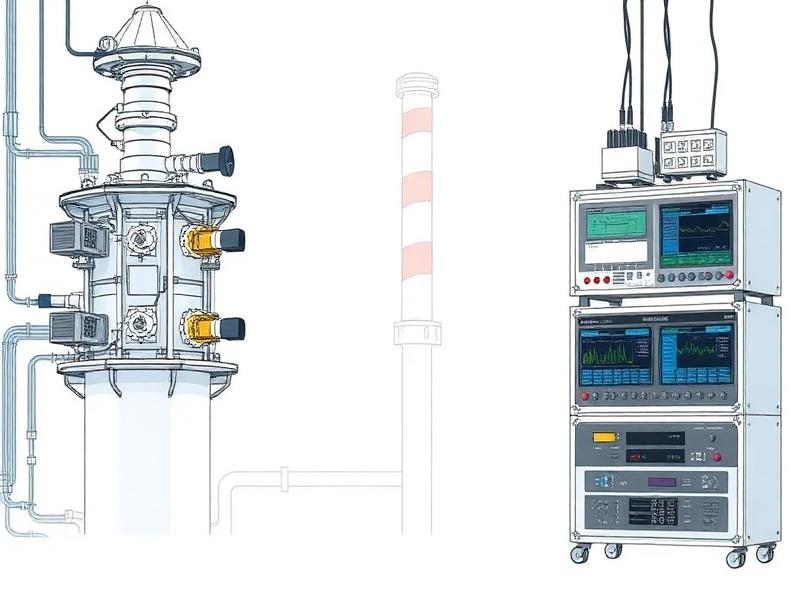

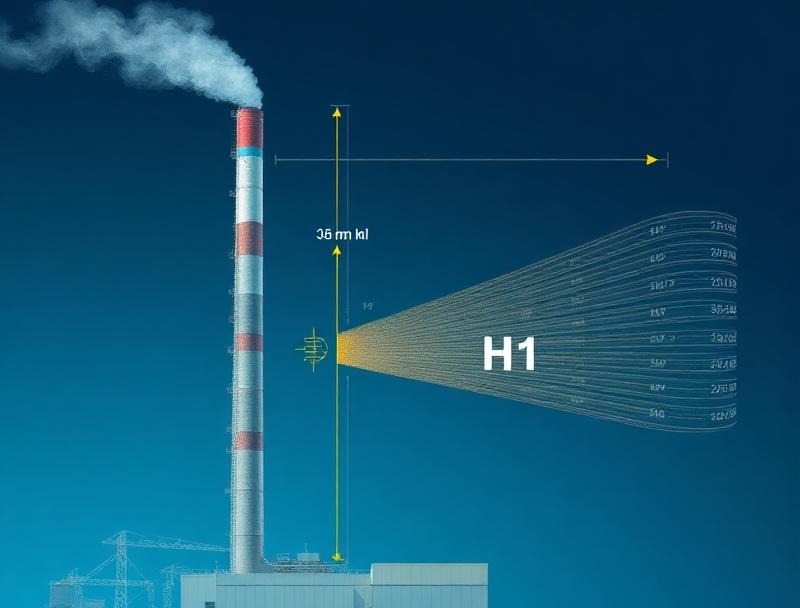
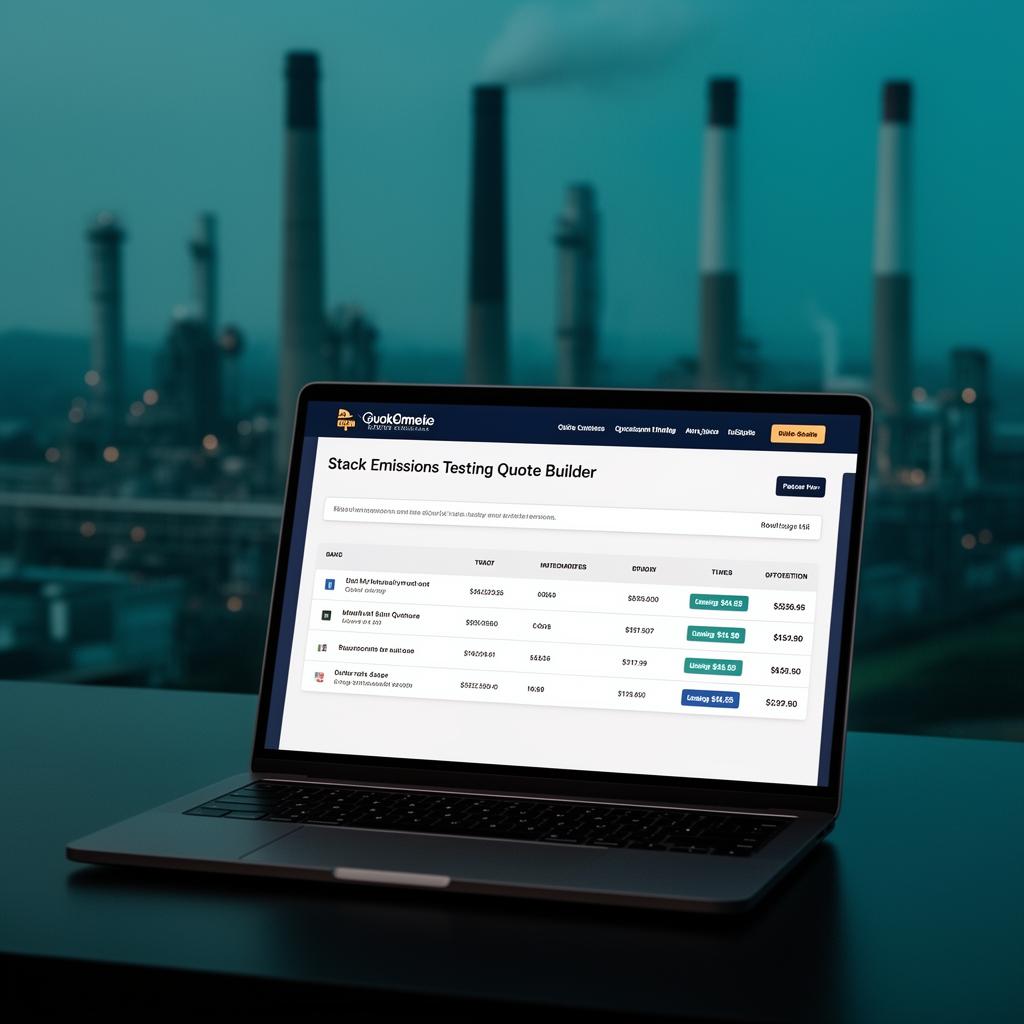
Services that often include MCERTS Stack Emissions Testing UK | UKAS Lab 24303:
See how UK clients have used our mcerts stack emissions testing uk | ukas lab 24303 expertise to satisfy regulators, planning authorities, and operational deadlines.

Add this service to your quote and submit a request. We'll review your scope and get back to you within 24 hours.
Step 2: Added everything you need? Review your basket and send your request.