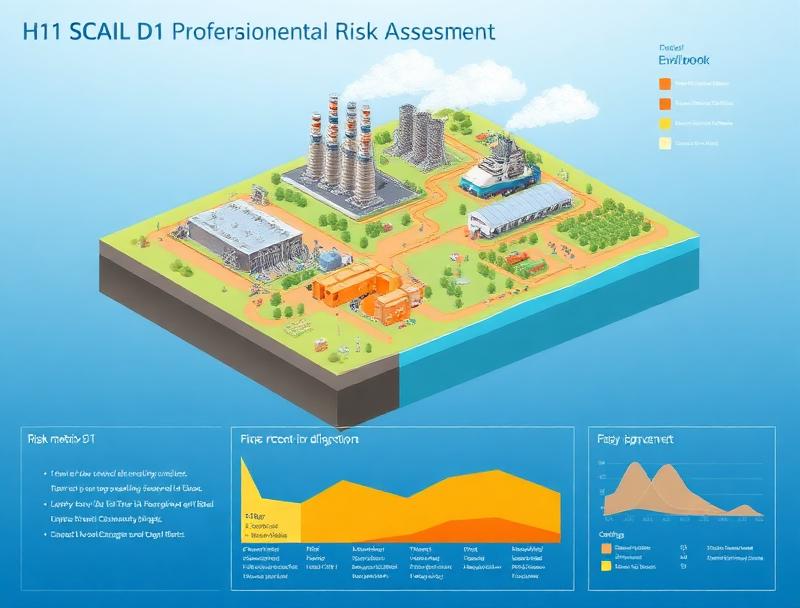
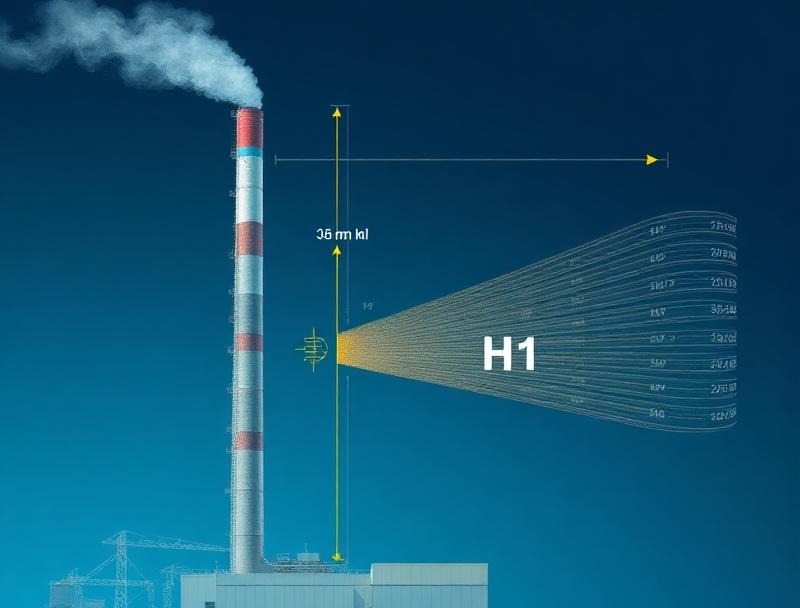
Air dispersion modelling UK using ADMS 5/6 and AERMOD to predict ground-level concentrations at sensitive receptors for planning, Environmental Permit risk assessment and H1 stack screening. Alkali tracks current UK air-quality guidance — including PG5/2(25) crematoria guidance, EA H1 and IAQM/EPUK Planning for Air Quality — and delivers the dispersion modelling each one requires.
UKAS Accredited Stack Testing (Lab 24303)
Regulator-Ready Reports
14-Day Query Support
Pre-Submission Review
Compliance Confidence Included
Pre-submission review, regulator-ready documentation, and 14 days of post-submission query support are included as standard — to reduce refusal risk and enforcement delays.
Air Dispersion Modelling UK – ADMS & AERMOD for Planning, Permits and Stack Assessment
Air dispersion modelling UK predicts how pollutants released from stacks, vents, roads and area sources disperse through the atmosphere and what concentrations reach sensitive receptors. We use ADMS 5/6 for the majority of UK regulatory work and AERMOD where US EPA-aligned modelling is required (e.g. multinational permitting). Modelling outputs are used to satisfy EA H1, IAQM/EPUK Planning for Air Quality, and bespoke permit risk assessments — providing the quantitative evidence that screening alone cannot deliver.
When Dispersion Modelling Is Required
Dispersion modelling is typically required where:
Planning applications need an Air Quality Assessment supported by modelling (see Air Quality Assessments)
Environmental Permit risk assessment cannot screen out emissions impacts
New plant, changes in emissions, or abatement modifications require updated impact evidence
There are sensitive receptors nearby (residential, schools, hospitals, ecological receptors)
Odour constraints exist and modelling is needed (see Odour Dispersion Modelling)
Stack height, discharge location or operational controls need evidence-based justification
Purpose of Dispersion Modelling
The purpose is to provide an objective, quantitative assessment of impact at receptors so decisions can be made defensibly. For planning, this supports impact significance and mitigation design. For permitting, it supports risk assessment, stack height selection, screening outcomes and regulator confidence.
What Dispersion Modelling Typically Covers
Depending on scope, dispersion modelling can include:
NO2, PM10, PM2.5 and other air quality determinands for planning assessments
Process contributions and total concentrations at receptors
Stack height sensitivity and discharge parameter testing
Odour modelling where odour units and frequency metrics are required
Scenario testing (baseline, future year, with/without mitigation, different operating modes)
How Dispersion Modelling Works in Practice
A defensible modelling assessment depends on transparent inputs, clear assumptions and a structured verification approach. We scope the model to the decision it needs to support, select appropriate meteorological and background data, define receptors and scenarios, and then present outputs in a planning- or permit-ready format with clear conclusions and mitigation recommendations.
Standards, Guidance and Regulatory Context
Dispersion modelling for UK planning and compliance is commonly aligned to EPUK & IAQM Planning for Air Quality Guidance, IAQM Guidance on the assessment of odour for planning, and GOV.UK Risk assessments for your environmental permit.
What the Service Delivers
Model scope and methodology aligned to planning or permitting objectives
Clear definition of assumptions, inputs, receptors and scenarios
Results tables and maps suitable for reports and stakeholder review
Impact interpretation and significance conclusions appropriate to the context
Mitigation recommendations and scenario testing where required
A clear, defensible report suitable for submission or regulator engagement
Limitations and Scope
Dispersion models are only as robust as the input data and assumptions. Where uncertainty is material, we make it explicit and recommend proportionate sensitivity testing or additional evidence to strengthen confidence.
For planning applications, air dispersion modelling quantifies how a proposed development will alter ground-level pollutant concentrations at sensitive receptors. Typical planning uses include traffic-derived NO2 and PM modelling with ADMS-Roads, combustion plant assessment (boilers, CHP, biomass, backup generators) with ADMS 5/6, and odour modelling where relevant. Outputs feed directly into an air quality assessment for planning and are written to satisfy EPUK & IAQM Planning for Air Quality Guidance, local development plan policies and Environmental Health Officer expectations.
Air Dispersion Modelling for Environmental Permits
For environmental permits, dispersion modelling supports the EA H1 risk assessment framework and bespoke permit applications. Modelling demonstrates that process contributions (PC) and predicted environmental concentrations (PEC) at sensitive human and ecological receptors remain within environmental assessment levels (EALs) and critical levels/loads. It also supports stack height determination, abatement specification and BAT justification. Modelled evidence is integrated into the environmental permit application and subsequent variations.
Modelling Stack Emissions, Combustion Plant and Industrial Processes
Stack emissions dispersion modelling uses measured emission rates from MCERTS stack emissions testing (or, at design stage, validated emission factors) to predict ground-level concentrations of NOx, SO2, CO, PM, VOCs, metals and other determinands. Inputs include stack height, diameter, exit velocity, exit temperature, mass emission rate and operating hours. Multi-stack and multi-source sites are modelled with the appropriate building downwash (PRIME) and terrain treatment so cumulative impacts at receptors are captured rather than treated stack-by-stack.
Receptors, Meteorology, Terrain and Building Effects
Receptor selection covers residential properties, schools, hospitals, designated habitats and any location identified in pre-application correspondence. Meteorological inputs use 5 years of hourly Met Office MIDAS data from the closest representative station, with NWP datasets where coastal exposure, complex terrain or sparse station coverage make observed data unrepresentative. Terrain is included via the ADMS pre-processor where elevation change is material. Building downwash is modelled with PRIME for stacks below 2.5× nearby building height, which is critical for short stacks on industrial sites.
What Inputs Are Needed for Dispersion Modelling
Site plan with stack/source locations, building footprints and heights
Mass emission rates per pollutant (measured or from manufacturer/emission factors)
Operating profile: hours per year, seasonal/diurnal variation, abatement availability
Receptor list and any local authority scoping correspondence
Background concentration data (we source from Defra UK-AIR as standard)
How Modelling Links to H1, Stack Height and MCP Permits
Dispersion modelling is the engine behind H1 stack height determination: sensitivity runs across stack height, exit velocity and temperature identify the minimum compliant configuration. For installations rated 1–50 MWth, the same modelling supports MCP permit applications by demonstrating that PCs at receptors are insignificant or, where not, that BAT abatement reduces residual impact to acceptable levels.
Frequently Asked Questions
Should I use ADMS or AERMOD for a UK Environmental Permit?
ADMS 5/6 is the de facto UK regulatory model and is preferred by the Environment Agency for H1 and bespoke permit risk assessments. AERMOD is accepted where US EPA conventions apply or where corporate methodology requires it. Both are valid; the choice should be justified in the methodology section.
What meteorological dataset do you use for UK air dispersion modelling?
We typically use 5 years of hourly Met Office MIDAS observations from the closest representative station, with NWP-derived data (e.g. ADMS NWP) where coastal, complex terrain or low station coverage makes observed data unrepresentative.
Can dispersion modelling justify a lower stack height?
Sometimes. Sensitivity testing across stack height, exit velocity and temperature can show whether a reduced height still delivers acceptable ground-level concentrations. Where it doesn't, the model evidences the minimum height required.
How are background concentrations handled in the model?
Background NO2, PM10 and PM2.5 are taken from Defra's UK-AIR background mapping for the relevant grid square and assessment year, with verification against nearby monitoring where the receptor is sensitive or the background is contested.
How long does a typical air dispersion modelling study take?
A standard single-stack ADMS assessment for a permit application takes 3–4 weeks from receipt of emissions data. Multi-source schemes, complex terrain or buildings effects (PRIME) extend this to 6–8 weeks.
What is air dispersion modelling?
Air dispersion modelling uses computational models such as ADMS 5/6 and AERMOD to predict how pollutants released from stacks, vents, roads or area sources disperse through the atmosphere and what concentrations reach sensitive receptors. It produces quantitative evidence of impact at residential, ecological and amenity locations that screening assessments alone cannot provide.
When is dispersion modelling required?
Dispersion modelling is required when planning Air Quality Assessments cannot be screened out, when an Environmental Permit application or variation needs H1 risk assessment, when new combustion plant or industrial emissions are introduced, when stack height needs evidence-based justification, or when sensitive receptors lie close enough to a source that screening criteria are exceeded.
What information is needed for dispersion modelling?
Required inputs are stack height, diameter, exit velocity and temperature, mass emission rates per pollutant, operating profile (hours per year and any seasonal variation), site plan with building footprints and heights, receptor locations and any local authority scoping correspondence. Background concentrations and meteorological data are sourced from Defra UK-AIR and the Met Office MIDAS network.
Can dispersion modelling support an environmental permit?
Yes. Dispersion modelling is a core component of EA H1 risk assessment and bespoke environmental permit applications. It demonstrates that process contributions and predicted environmental concentrations at sensitive receptors remain within environmental assessment levels and critical levels, and it justifies stack height, abatement specification and BAT conclusions.
How does dispersion modelling relate to stack height?
Stack height directly controls ground-level concentrations: taller stacks disperse emissions over a wider area and reduce receptor impact. Sensitivity runs across stack height, exit velocity and exit temperature identify the minimum compliant configuration. This is the foundation of an H1 stack height determination and is often the deciding evidence for permit approval.
Does PG5/2(25) require dispersion modelling for crematoria?
PG5/2(25) says that whatever method is used to determine stack height and efflux velocity, an assessment of the impact of emissions on local ambient air quality must be carried out — for new crematoria as part of the permit application, and for existing crematoria at permit review. The guidance directs operators to tools such as the Environment Agency's H1 software tool or air dispersion modelling. Alkali provides ADMS-based dispersion modelling of NOx, mercury, particulates, HCl and TOC from cremator stacks to support permit review, plant replacement and abatement upgrade decisions.
Why is NOx dispersion modelling now important for crematoria?
PG5/2(25) notes that previous crematoria guidance did not include reference to NOx, so the dispersion of NOx emissions may not have been considered when existing stack heights were designed. Regulators may need to require tighter emission limit values for some existing crematoria, and for new crematoria the stack height may need to be increased. Alkali models NOx dispersion at nearby sensitive receptors and provides the evidence base regulators expect at permit review.
Get environmental compliance quotes online
Skip the back-and-forth. Add the services you need, share your permit or scope, and Alkali responds with a clear, fixed-fee proposal — usually within one working day. Faster scoping, fewer emails, more accurate quotes.
Air Dispersion Modelling UK (ADMS & AERMOD) in action
See how UK clients have used our air dispersion modelling uk (adms & aermod) expertise to satisfy regulators, planning authorities, and operational deadlines.
Acute Exposure Guideline Levels (AEGLs) were developed by the US Environmental Protection Agency to evaluate the potential health impacts of accidental chemical releases into the air. They define concentration thresholds for three effect levels:
Approach
Alkali Consultants deployed their in-house AEGL specialist, applying ADMS dispersion modelling software to calculate NO₂ AEGL concentrations (ppm) at 40 sensitive receptors surrounding the proposed data centre. Close collaboration with the client ensured the EA's requirements were fully addressed at each stage. By combining international best practice with rigorous modelling, Alkali Consultants demonstrated the flexibility to meet regulatory demands beyond conventional UK frameworks.
Outcome
All five time-period objectives for NO₂ AEGLs were achieved.