
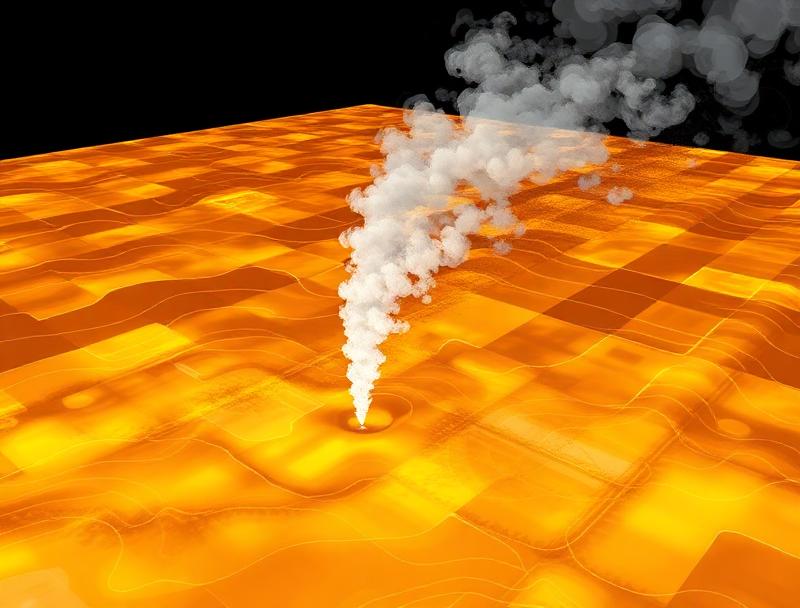
Odour Dispersion Modelling
ADMS-based odour dispersion modelling producing receptor-specific ouE/m3 predictions for planning, EPR permits and abatement specification.
Build your quote in seconds — our team responds within 1 working hour.
Compliance Confidence Included
Pre-submission review, regulator-ready documentation, and 14 days of post-submission query support are included as standard — to reduce refusal risk and enforcement delays.
Odour Dispersion Modelling Using ADMS for Quantitative Receptor Predictions
Odour dispersion modelling produces quantitative predictions of odour concentration at receptors in European odour units (ouE/m3) for direct comparison against IAQM benchmarks. Modelling is run in ADMS 6 with building downwash, terrain and the appropriate fluctuations module to capture peak-to-mean behaviour that drives odour annoyance. Source terms are derived from olfactometry-tested ouE/s emission rates or from validated emission factors where direct measurement is not feasible. Outputs include 98th percentile contour plots and discrete receptor tables suitable for permit, planning and abatement design decisions.
Source Term Derivation
- EN 13725 dynamic olfactometry results for stacks, vents and area sources
- Wind tunnel or flux hood measurements for liquid surfaces and lagoons
- Validated emission factors for biofilters, AD, composting and waste transfer where direct sampling is impractical
- Treatment of variable emission rates (operating mode, batch peaks, abatement bypass)
Model Setup
- ADMS 6 with PRIME building downwash and terrain pre-processor where relevant
- Fluctuations module enabled to predict 98th percentile of hourly means
- Three to five years of MIDAS hourly met data from the closest representative station
- Discrete receptors at residential, amenity and ecological locations plus a Cartesian grid for contours
Outputs and Use
Reports present 98th percentile ouE/m3 at each receptor against the relevant IAQM benchmark (1.5, 3.0 or 6.0 ouE/m3 depending on offensiveness). Contour plots show predicted footprint for planning officers and EHOs. Sensitivity runs quantify the benefit of proposed abatement (e.g. % odour removal, scrubber addition) so design decisions are evidence-led rather than assumed.
Related Odour Modelling Services
ADMS odour modelling is the quantitative engine behind our IAQM-compliant odour impact assessment reports, with input data from EN 13725 olfactometry sampling. For multi-pollutant sites we also run broader ADMS air dispersion modelling. Modelling outputs commonly support EA Environmental Permit applications and variations.
Odour Dispersion Modelling for Planning
For planning applications, odour dispersion modelling quantifies whether a proposed odour source — food production, waste transfer, anaerobic digestion, composting, sewage treatment, kitchen extract — will cause odour annoyance at sensitive receptors. The IAQM benchmark of 1.5, 3.0 or 6.0 ouE/m3 (98th percentile of hourly means) is selected based on odour offensiveness, and modelled concentrations at residential, school and amenity receptors determine the significance conclusion. The same modelling supports the IAQM odour impact assessment submitted with the planning application and runs alongside the broader air quality assessment for planning.
Odour Dispersion Modelling for Environmental Permits
For environmental permits, odour modelling supports EA H4 Odour Management Plans and bespoke permit applications. It demonstrates that current or proposed abatement (biofilters, scrubbers, RTOs, activated carbon) reduces receptor-level concentrations below the IAQM benchmark and informs Odour Management Plan content. Modelling is also used in permit variations where capacity changes, new sources or community complaints require updated evidence. Outputs are written to integrate directly into the environmental permit application.
When Modelling Is Needed Alongside an Odour Assessment
A qualitative IAQM odour assessment (FIDOL-based) can be sufficient for low-risk sites with clear separation from receptors. Quantitative modelling becomes necessary when receptors are close, when complaints exist, when permit conditions require it, when abatement options need comparing, or when planning officers request quantitative evidence. A site odour survey often precedes modelling to confirm dominant sources and inform sampling priorities.
Odour Sources, Emission Rates and Receptor Sensitivity
Source types include point sources (stacks, biofilter outlets, scrubber discharges), area sources (lagoons, composting windrows, open tanks) and volume sources (buildings under negative pressure). Emission rates are derived from EN 13725 olfactometry on collected samples, wind tunnel or flux hood measurements for area sources, or validated emission factors at design stage. Receptor sensitivity is graded by land use — residential and schools attract the strictest 1.5 ouE/m3 benchmark for highly offensive odours, while industrial neighbours may use 6.0 ouE/m3. Kitchen extract odour assessments follow a related but separate methodology aligned to DW/172.
Odour Contours, Percentiles and Interpretation
Outputs are presented as 98th percentile ouE/m3 contour plots overlaid on the site and receptor map, plus discrete receptor tables. The 98th percentile of hourly means is used because odour annoyance is driven by short-duration peaks, not annual averages — this is the IAQM-recommended statistic and matches how complaints are generated. Sensitivity runs comparing existing and upgraded abatement quantify the receptor-level benefit of investment, which is often the deciding evidence for permit variations or planning approvals.
What Inputs Are Needed for Odour Modelling
- Site layout with source locations, building footprints and heights
- Source type and operational profile (continuous, batch, seasonal)
- Emission rates: EN 13725 olfactometry results where available, or design parameters
- Abatement details: type, design efficiency, bypass arrangements, maintenance regime
- Receptor list and any complaint history or local authority correspondence
- Met data station preference (we select the closest representative MIDAS station)
Frequently Asked Questions
Why use the 98th percentile of hourly means for odour modelling?
Annoyance is driven by short-duration peaks, not annual averages. The 98th percentile of hourly means is the IAQM-recommended statistic and matches how nuisance is perceived and complained about.
Do I need EN 13725 olfactometry results before modelling?
Direct olfactometry gives the most defensible source term. Where a site is at design stage, validated emission factors can be used with explicit uncertainty caveats and a recommendation to verify post-commissioning.
How does the model handle batch or intermittent emissions?
Variable emission profiles are encoded as time-varying source terms in ADMS so peaks during specific operating hours, batch turnovers or abatement maintenance are reflected in the percentile statistics.
Can modelling demonstrate the benefit of upgrading abatement?
Yes. Comparative runs at current and proposed abatement performance quantify the receptor-level reduction in ouE/m3, which is often the deciding evidence for permit variations or planning approvals.
What met data do you use and why does the choice matter?
Three to five years of sequential hourly MIDAS data from the closest representative station including cloud cover. Met choice changes predicted percentiles materially, so station selection and rationale are recorded explicitly.
How are area sources like lagoons or composting windrows modelled?
As volume or area sources with flux measured by wind tunnel or hood, scaled across the active surface area and adjusted for surface activity (turning, aeration) where applicable.
What is odour dispersion modelling?
Odour dispersion modelling uses ADMS 6 with the fluctuations module to predict concentrations of odour at sensitive receptors, expressed in European odour units per cubic metre (ouE/m3) at the 98th percentile of hourly means. It quantifies whether a proposed or existing odour source will cause annoyance at residential, school or amenity locations and supports planning, permitting and abatement decisions.
When is odour modelling required?
Odour dispersion modelling is required when receptors are close to the source, when complaints exist, when planning officers or the Environment Agency request quantitative evidence, when permit conditions require it, or when abatement upgrades need a cost-benefit case. A qualitative IAQM odour assessment may suffice for low-risk sites with clear separation.
What are odour units?
An odour unit (ouE) is the amount of odorant that, when evaporated into one cubic metre of neutral gas, produces a physiological response equivalent to the European reference odorant. Odour concentrations are reported in ouE/m3 and measured by EN 13725 dynamic olfactometry. The IAQM benchmarks at receptors are 1.5, 3.0 or 6.0 ouE/m3 (98th percentile) depending on odour offensiveness.
Can odour modelling support a planning application?
Yes. Quantitative modelling outputs — 98th percentile ouE/m3 contour plots and receptor-specific concentrations compared against IAQM benchmarks — are commonly the deciding evidence for planning officers and Environmental Health Officers when an odour-emitting development is contested. Modelling also supports condition wording and Odour Management Plan structure.
How does odour modelling link to an IAQM odour assessment?
Quantitative odour dispersion modelling is the technical engine that produces the receptor-level concentrations used in an IAQM odour impact assessment. The IAQM methodology combines those modelled outputs with FIDOL (Frequency, Intensity, Duration, Offensiveness, Location) source characterisation to deliver an overall significance conclusion suitable for planning or permitting.
Get environmental compliance quotes online
Skip the back-and-forth. Add the services you need, share your permit or scope, and Alkali responds with a clear, fixed-fee proposal — usually within one working day. Faster scoping, fewer emails, more accurate quotes.
- Fixed-fee proposal
- Specialist scope review
- Response within one working day
Online quoting reduces admin, avoids repeated emails, and helps operators get a faster, more accurate scope.
You May Also Need
Air Dispersion Modelling UK (ADMS & AERMOD)
Environmental Risk Assessments (H1, SCAIL, D1)

IAQM Odour Impact Assessment

Odour Monitoring (MCERTS)
Services that often include Odour Dispersion Modelling:
Need a Quote for Odour Dispersion Modelling?
Add this service to your quote and submit a request. We'll review your scope and get back to you within 24 hours.