
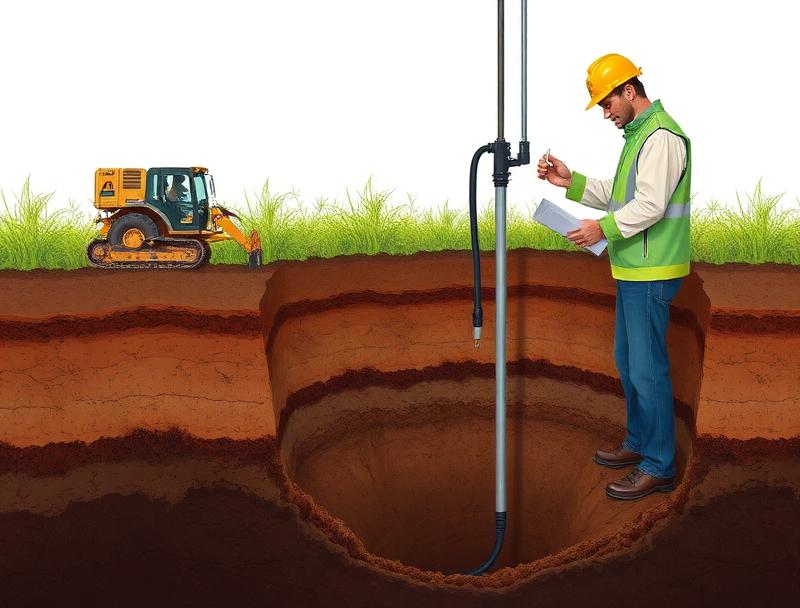
Phase 1 & Phase 2 Site Investigations
Phase 1 and Phase 2 Site Investigations assess and confirms land contamination risks to support safe, compliant development on sensitive or brownfield sites.
Build your quote in seconds — our team responds within 1 working hour.
Compliance Confidence Included
Pre-submission review, regulator-ready documentation, and 14 days of post-submission query support are included as standard — to reduce refusal risk and enforcement delays.
Phase 1 Desktop Study and Phase 2 Intrusive Investigation UK for Planning, Permitting and Contaminated Land Risk
Phase 1 and Phase 2 Site Investigations provide the evidence needed to understand contaminated land risk for development, transactions, permitting and compliance. A Phase 1 (Desk Study) identifies potential contamination sources, pathways and receptors and establishes a Conceptual Site Model (CSM). Where risk cannot be screened out, a Phase 2 (Intrusive Investigation) collects soil, groundwater and ground gas data to quantify risk, confirm liabilities, and support remediation design and planning condition discharge.
When a Phase 1 or Phase 2 Site Investigation Is Required
Site investigations are typically required where:
- A planning condition requires a Phase 1 Desk Study and, if necessary, a Phase 2 Intrusive Investigation
- Historical land uses suggest contamination risk (industrial, made ground, fuel storage, waste, infilled ground)
- You are purchasing, selling or refinancing land and need defensible risk evidence
- Ground gas risk may affect buildings (landfill, infilled ground, peat, former works) and a gas assessment is needed
- A permit application/variation needs supporting land and groundwater risk evidence
- Regulators, insurers or funders require LCRM/CLR11-aligned reporting and a clear risk conclusion
Purpose of Phase 1 & Phase 2 Investigations
The purpose is to produce clear, auditable evidence that supports decisions: whether land is suitable for use, what risks exist, what remediation is required, and how to demonstrate compliance. A good investigation reduces uncertainty, avoids unnecessary remediation cost, and prevents late-stage programme delays caused by missing evidence.
Phase 1 Desktop Study (What It Covers)
A Phase 1 assessment typically includes:
- Historical mapping and data review (previous land uses and potential contaminant sources)
- Environmental setting (geology, hydrogeology, groundwater vulnerability, surface waters)
- Regulatory context (planning requirements, Part 2A context where relevant, local constraints)
- Site walkover to identify visible evidence of risk, sensitive receptors and constraints
- Conceptual Site Model (CSM) and Preliminary Risk Assessment (source-pathway-receptor linkages)
- Recommendations including whether Phase 2 is required and how to scope it proportionately
Phase 2 Intrusive Investigation (What It Covers)
Where Phase 1 identifies plausible pollutant linkages, Phase 2 commonly includes:
- Intrusive investigation (trial pits, boreholes) targeted to likely hotspots and pollutant linkages
- Soil, groundwater and surface water sampling with chain-of-custody controls
- Laboratory analysis selected to match the conceptual risks (metals, hydrocarbons, VOCs, PAHs, asbestos, etc.)
- Ground gas and vapour monitoring where methane/CO2 or vapours may affect buildings
- Generic or detailed quantitative risk assessment aligned to planning/permitting requirements
- Clear conclusions on suitability for use and the need for remediation or further work
How Site Investigations Are Used in Practice
Most delays occur when investigations are scoped too late or without a clear CSM. We scope Phase 2 from the Phase 1 model so investigations are targeted, defensible and cost-effective. Outputs are then used to discharge planning conditions, support remediation options appraisal, inform foundation and drainage design, and provide evidence packs for stakeholders and regulators.
Standards, Guidance and Regulatory Context
Site investigations and contaminated land risk management commonly align to Land Contamination: Risk Management (LCRM), Model Procedures for the Management of Land Contamination (CLR11), and BS 10175: Investigation of potentially contaminated sites.
What the Service Delivers
- Phase 1 Desk Study report with Conceptual Site Model and preliminary risk conclusions
- Clear Phase 2 scope and sampling strategy (if required)
- Phase 2 Intrusive Investigation results with transparent methodology and QA
- Risk assessment conclusions suitable for planning, permitting and stakeholder review
- Practical remediation and next-step recommendations (proportionate and evidence-led)
What We Need From You
To scope efficiently, we typically request:
- Site address, boundary plan and proposed development layout (or operational scope)
- Planning condition wording (if applicable) and target timelines
- Any existing reports, borehole logs, gas data or prior investigations
- Access constraints, programme and any known hotspots or historic uses
Frequently Asked Questions
What is the difference between Phase 1 and Phase 2?
Phase 1 is a desk-based assessment plus walkover to identify risks and build a Conceptual Site Model. Phase 2 is intrusive investigation and sampling to confirm and quantify those risks.
Do we always need Phase 2 after Phase 1?
No. If Phase 1 can robustly screen out pollutant linkages, Phase 2 may not be required. If risk remains plausible, Phase 2 is usually necessary for planning sign-off.
Can you scope Phase 2 to avoid unnecessary cost?
Yes. We scope Phase 2 directly from the CSM so investigation targets the risks that matter to planning, receptors and design.
Will this help discharge planning conditions?
Yes. Reports are structured to match common planning condition requirements and regulator expectations.
You May Also Need
Contaminated Land Assessment
Environmental Impact Assessment UK (EIA)
Landfill Gas Risk Assessment
Services that often include Phase 1 & Phase 2 Site Investigations:
Need a Quote for Phase 1 & Phase 2 Site Investigations?
Add this service to your quote and submit a request. We'll review your scope and get back to you within 24 hours.