
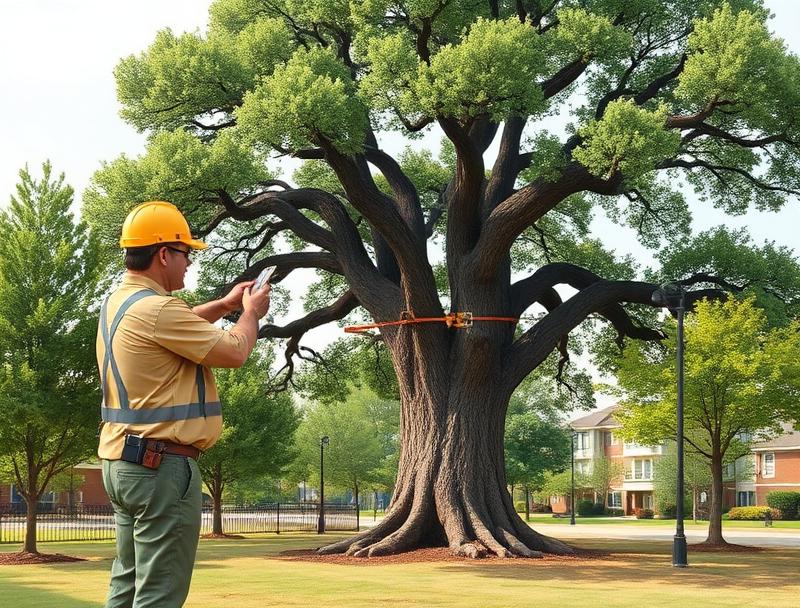
Arboricultural Survey (Tree Survey & AIA)
Build your quote in seconds — our team responds within 1 working hour.
Step 2: Added everything you need? Review your basket and send your request.
Read more about usShow
Arboricultural Survey assesses tree condition and development impact to meet planning requirements and protect retained trees.
Compliance Confidence Included
Pre-submission review, regulator-ready documentation, and 14 days of post-submission query support are included as standard — to reduce refusal risk and enforcement delays.
BS 5837 Tree Surveys, Arboricultural Impact Assessments and Tree Constraints Plans for Planning
An Arboricultural Survey (Tree Survey) identifies trees on and near a development site and evaluates their quality, constraints and retention potential. For planning applications, surveys are commonly required to BS 5837 and are used to create a Tree Constraints Plan (TCP) and an Arboricultural Impact Assessment (AIA) that demonstrates how design protects retained trees and integrates appropriate mitigation. A robust arboricultural package reduces planning delays, supports condition discharge and prevents costly redesign caused by late-stage tree constraints.
When an Arboricultural Survey or AIA Is Required
Arboricultural assessment is typically required where:
- Planning validation requirements request a BS 5837 tree survey and constraints plan
- Trees may be affected by demolition, excavation, services, access roads or building footprints
- Trees are protected by a TPO or are within a conservation area
- Tree retention is a planning priority and design needs evidence-led constraints mapping
- Construction methodology needs an Arboricultural Method Statement (AMS) and protection plan for condition discharge
Purpose of a Tree Survey and AIA
The purpose is to provide defensible evidence so trees are considered early, impacts are reduced through design, and retained trees are protected properly during construction. A good arboricultural package supports planning decisions, reduces objections and provides clear site controls to prevent root damage and tree decline.
What a BS 5837 Tree Survey Typically Includes
- Tree identification, category grading and condition assessment
- Measurements (including stem diameter, height and canopy spread as required)
- Root Protection Area (RPA) calculation and constraints mapping
- Tree Constraints Plan (TCP) to inform design and layout
- Recommendations on retention, removals and design constraints
Arboricultural Impact Assessment (AIA) and Method Statement
Where trees may be affected, an AIA typically includes. Where construction governance is broader, arboriculture often links into Construction Environmental Management Plans (CEMP).
- Impact assessment (direct and indirect impacts on trees and RPAs)
- Design mitigation (layout changes, no-dig construction, service routing, boundary design)
- Tree Protection Plan (TPP) and protection measures during works
- Arboricultural Method Statement (AMS) where required for planning conditions
- Site monitoring recommendations during construction where appropriate
Standards, Guidance and Regulatory Context
Arboricultural assessments commonly align to BS 5837: Trees in relation to design, demolition and construction, Tree Preservation Orders and trees in conservation areas, and Arboricultural Association industry guidance and good practice.
What the Service Delivers
- BS 5837 tree survey schedule and Tree Constraints Plan (TCP)
- Arboricultural Impact Assessment (AIA) suitable for planning submission
- Tree Protection Plan (TPP) and Arboricultural Method Statement (AMS) where required
- Clear mitigation recommendations to protect retained trees and reduce planning risk
- Condition discharge support where tree protection measures must be evidenced
What We Need From You
- Site boundary/red line plan and proposed layout (if available)
- Programme and any known constraints (access, demolition, service routes)
- Planning validation requirements or condition wording (if applicable)
- Any known TPO/conservation area information (or we can help confirm)
Frequently Asked Questions
Is a BS 5837 tree survey required for planning?
Often yes where trees may be affected. Many LPAs require a BS 5837 survey and constraints plan as part of validation or to support determination.
What is the difference between a tree survey and an AIA?
A tree survey records tree quality and constraints. An AIA assesses how the proposal affects those trees and sets out mitigation and protection measures.
Do you provide tree protection plans and method statements?
Yes. Where required, we provide TPP and AMS to support planning conditions and construction protection requirements.
Can tree constraints affect layout and foundations?
Yes. RPAs can constrain excavation, services and construction methods. Early arboricultural input prevents redesign later.
You May Also Need

Biodiversity Net Gain (BNG)
Ecology Surveys
Environmental Impact Assessment UK (EIA)
Services that often include Arboricultural Survey (Tree Survey & AIA):
Need a Quote for Arboricultural Survey (Tree Survey & AIA)?
Add this service to your quote and submit a request. We'll review your scope and get back to you within 24 hours.
Step 2: Added everything you need? Review your basket and send your request.