
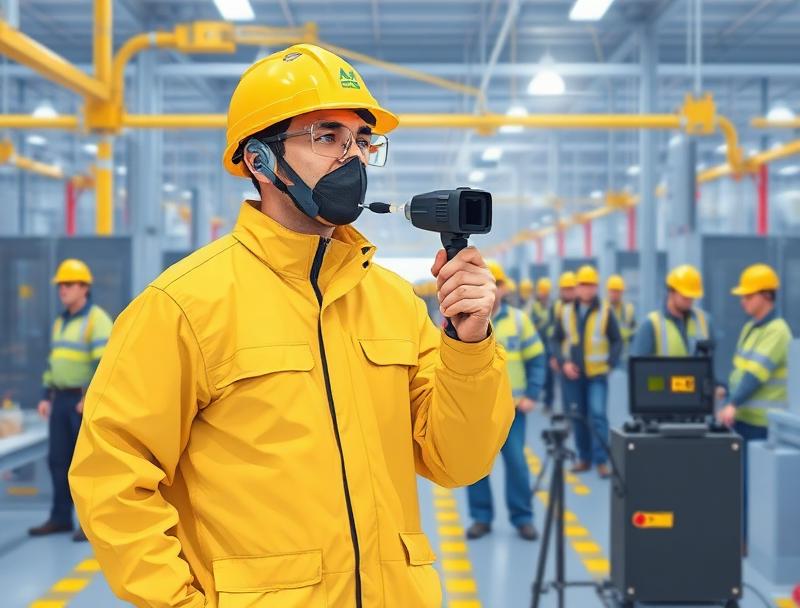
COSHH Air Monitoring
Build your quote in seconds — our team responds within 1 working hour.
Step 2: Added everything you need? Review your basket and send your request.
Read more about usShow
COSHH Air Monitoring monitors workplace air to assess exposure to hazardous substances and ensure COSHH compliance.
Compliance Confidence Included
Pre-submission review, regulator-ready documentation, and 14 days of post-submission query support are included as standard — to reduce refusal risk and enforcement delays.
COSHH Air Monitoring UK for Workplace Exposure Assessment, WEL Compliance and Risk Reduction
COSHH air monitoring measures airborne contaminants in the workplace so you can assess exposure risk, verify controls, and demonstrate compliance with Workplace Exposure Limits (WELs) where applicable. If your activities generate dusts, fumes, vapours or aerosols, exposure monitoring provides objective evidence to support risk assessments, protect worker health, and reduce enforcement and liability risk. Monitoring is especially important where processes change, controls are upgraded, complaints occur, or health surveillance flags potential issues.
When COSHH Air Monitoring Is Required
COSHH air monitoring is typically required where:
- There is potential exposure to airborne hazardous substances (dust, silica, welding fume, solvents, isocyanates, acids, fumes)
- You need to assess compliance against Workplace Exposure Limits (WELs)
- Local exhaust ventilation (LEV) or RPE is relied upon and you need evidence controls are effective
- Processes, materials or production volumes change and exposures may increase
- Risk assessments are outdated or based on assumptions rather than measured data
- Health surveillance, worker feedback or incidents indicate potential exposure concerns
Purpose of COSHH Air Monitoring
The purpose is to quantify exposure so controls can be targeted and proportionate. Monitoring helps you answer: what is in the air, who is exposed, for how long, how exposures compare to limits, and what control improvements will reduce risk most effectively.
How COSHH Air Monitoring Works in Practice
A robust exposure assessment considers tasks, duration, variability, workforce roles and control measures. Monitoring may include personal exposure sampling (preferred for WEL comparison) and targeted static/background sampling where relevant. Results are interpreted alongside work practices, LEV performance, housekeeping, RPE use and maintenance records so actions are practical and evidence-led.
What COSHH Monitoring Can Cover
Monitoring scope is tailored to your substances and processes. Where breathing air is supplied for RPE, see Breathing Air Quality Testing.
- Inhalable and respirable dust (including task-based exposure assessment)
- Respirable crystalline silica (RCS) where relevant to cutting, grinding, demolition or materials handling
- Welding fume and metal fume exposure assessment
- Solvent vapours and VOCs (cleaning, coating, printing, manufacturing)
- Acid mists and process aerosols where applicable
What the Service Delivers
- A monitoring strategy aligned to your COSHH objectives and exposure scenarios
- Sampling results presented clearly with exposure interpretation against relevant criteria
- Identification of high-exposure tasks and priority control opportunities
- Practical recommendations (LEV improvements, work practice changes, RPE governance, housekeeping)
- A report suitable for COSHH assessments, audits, contractor assurance and internal governance
Standards, Guidance and Regulatory Context
COSHH monitoring and exposure assessment commonly align to HSE COSHH (Control of Substances Hazardous to Health), HSE EH40 Workplace Exposure Limits (WELs), and HSE HSG258 Local Exhaust Ventilation (LEV) guidance.
Who COSHH Air Monitoring Is For
- Manufacturing and industrial sites with airborne dusts, fumes or vapours
- Construction and demolition teams managing dust and silica exposure risk
- Operators using solvents, coatings or chemicals with inhalation hazards
- Facilities strengthening audit readiness and compliance evidence systems
Frequently Asked Questions
Is COSHH air monitoring legally required?
COSHH requires you to prevent or adequately control exposure. Monitoring is required where it is necessary to ensure control measures are effective or to demonstrate compliance with WELs.
What is the difference between personal and static monitoring?
Personal monitoring measures exposure in the breathing zone of the worker and is typically used for WEL comparison. Static monitoring is location-based and is useful for identifying hotspots or background levels.
How often should we carry out COSHH monitoring?
Frequency is risk-based and depends on process variability, controls, and whether changes occur. Many sites monitor routinely for high-risk tasks and repeat after significant changes.
Can monitoring help reduce the cost of controls?
Yes. Evidence helps target controls to the tasks and areas that drive exposure, avoiding blanket measures that do not address the real risk.
Get a fixed-fee MCERTS stack testing quote online
Add the services you need, upload your permit conditions, and Alkali will review the scope and respond with a clear proposal — no phone tag, no email chains. A former Environment Agency officer reviews every brief for accuracy before pricing.
- Fixed-fee MCERTS scope
- Former EA officer review
- Response within one working day
Step 2: Added everything you need? Review your basket and send your request.
Online quoting reduces admin, avoids repeated emails, and helps operators get a faster, more accurate scope.
You May Also Need
Breathing Air Quality Testing

Health & Safety Risk Assessment

Indoor Air Quality Monitoring
Services that often include COSHH Air Monitoring:
Need a Quote for COSHH Air Monitoring?
Add this service to your quote and submit a request. We'll review your scope and get back to you within 24 hours.
Step 2: Added everything you need? Review your basket and send your request.