


Stack Testing Methods & Standards UK — Stack Emissions & Monitoring by Alkali Environmental Consultants (UKAS Lab No. 24303, UK-wide)

Stack Testing Methods & Standards UK

Updated 23 July 2026
Call 0800 098 2610

Build your quote in seconds — our team responds within 1 working hour.

Step 2: Added everything you need? Review your basket and send your request.

UK MCERTS stack emissions testing uses BS EN reference methods (13284-1 particulates, 14791 SO₂, 14792 NOx, 14385 metals, 1948 dioxins, 12619 TOC) plus EA M-series guidance and EN 14181 for CEMS QAL2/AST. Only methods on Alkali's current UKAS schedule (Lab 24303) are used for accredited reporting.

Read more about usShow

UK reference table of stack emissions testing methods and standards used by Alkali under UKAS Lab 24303 — pollutant by pollutant, with sampling technique, whether isokinetic sampling is required, laboratory analysis needs and typical UK sectors. Aligned to EA M-series guidance and MCERTS Performance Standards.

UKAS Accredited Stack Testing (Lab 24303)
Regulator-Ready Reports
14-Day Query Support
Pre-Submission Review

Compliance Confidence Included

Pre-submission review, regulator-ready documentation, and 14 days of post-submission query support are included as standard — to reduce refusal risk and enforcement delays.

How to read this reference

Stack emissions testing methods are defined by the pollutant, the plant type and the permit. UK regulators expect MCERTS-accredited providers to use the reference BS EN method wherever one exists, and to use EA M-series technical guidance to interpret it in a UK permit context. The table below sets out the reference methods Alkali uses under UKAS Laboratory No. 24303. Before commissioning any testing, check that the provider's UKAS schedule of accreditation covers your specific parameters — a generic 'MCERTS accredited' statement is not the same as a pollutant being on the accredited scope.

UK stack emissions testing reference table

DeterminandStandard methodTypical equipmentIsokinetic?Lab analysis?Common UK sectors
Particulate matter (dust)BS EN 13284-1Heated isokinetic sampling train, in-stack filterYesYes — gravimetricEfW, biomass, cement, manufacturing
NOx (NO + NO₂)BS EN 14792Chemiluminescence analyser (MCERTS-certified)NoNoMCP, CHP, boilers, EfW
SO₂BS EN 14791Wet chemistry sampling train or MCERTS analyserNoSometimes (H₂O₂ absorption)Combustion, IED installations
COBS EN 15058NDIR analyser (MCERTS-certified)NoNoAll combustion plant
O₂BS EN 14789Paramagnetic or zirconia analyserNoNoAll permit-normalised reporting
Total VOC / TOCBS EN 12619Heated FID analyserNoNoCoating, printing, solvents, EfW
Speciated VOCs / multi-gasUS EPA 320 / BS EN 15267 with FTIRPortable FTIR analyserNoOptional cross-checkChemicals, pharma, crematoria, EfW
HClBS EN 1911Wet chemistry train or FTIRNoYes (IC)EfW, hazardous waste
HFISO 15713Wet chemistry train or FTIRNoYes (ISE / IC)EfW, glass, minerals
NH₃EA M-series (FTIR)Portable FTIR analyserNoOptionalSCR abatement, waste
Metals (Sb, As, Cd, Cr, Co, Cu, Pb, Mn, Ni, V)BS EN 14385Isokinetic sampling with impinger trainYesYes — ICP-MSEfW, industrial processes
Mercury (Hg)BS EN 13211 / EN 14884 (CEMS)Isokinetic KMnO₄ train / mercury analyserYesYes — CVAFS/CVAASEfW, crematoria (PG5/2(25)), coal
Dioxins / furans (PCDD/F)BS EN 1948-1 to -3Isokinetic long-duration samplingYesYes — HRGC/HRMSEfW, hazardous waste, crematoria
Flow / velocityBS EN ISO 16911-1Pitot tube (S-type or L-type)NoNoAll accredited testing
MoistureBS EN 14790Condensation train / weighed impingersNoNoAll permit-normalised reporting
Sample location suitabilityBS EN 15259Pre-test survey, homogeneity checkN/ANoAll UK stack testing
CEMS QAL2 / ASTBS EN 14181Parallel reference measurementsMethod-dependentMethod-dependentAll IED CEMS installations

Table current as of July 2026. Only parameters on Alkali's current UKAS schedule (Lab 24303) are used for accredited reporting; verify scope at ukas.com.

EA guidance and regulatory context

In addition to the BS EN reference methods above, UK stack emissions testing is delivered against the Environment Agency's M-series technical guidance notes (M1, M2, M3, M5, M8, M17, M20, M21, M23) and MCERTS Performance Standards for stack emissions monitoring organisations. Accredited providers must operate under ISO/IEC 17025 and demonstrate MCERTS personnel competence (Level 1 and Level 2 certification). For continuous emissions monitoring systems (CEMS), BS EN 14181 governs QAL1 (instrument certification), QAL2 (parallel calibration), QAL3 (drift control) and the annual surveillance test (AST).

How to check a provider's method scope

  • Ask for the provider's UKAS Laboratory Number and check it on ukas.com
  • Cross-reference each permit determinand against their Schedule of Accreditation
  • Confirm sample location suitability under BS EN 15259 before booking
  • Ask for MCERTS personnel certificate numbers of the technicians attending site
  • For CEMS work, confirm they hold EN 14181 QAL2 / AST on scope, not just periodic testing

Get a scope check under Alkali's UKAS accreditation

Send us your permit or monitoring schedule and we'll return a method-by-method scope check against Alkali's current UKAS accredited scope (Lab 24303) — free, within 24 working hours. Start with our online stack testing quote or read our guide to choosing a UK stack testing company.

Frequently Asked Questions

What is the difference between UKAS and MCERTS accreditation?

UKAS accredits laboratories against ISO/IEC 17025 for technical competence. MCERTS is the Environment Agency's certification scheme built on top — MCERTS Performance Standards for equipment, methods and personnel apply specifically to environmental monitoring. A UK stack testing provider needs both: UKAS accreditation to ISO/IEC 17025 with the MCERTS stack methods on scope.

Which stack testing methods require isokinetic sampling?

Particulate matter (BS EN 13284-1), metals (BS EN 14385), mercury (BS EN 13211), and dioxins/furans (BS EN 1948) all require isokinetic sampling — the sample is drawn from the stack at the same velocity as the flue gas to avoid over- or under-representing particle-bound pollutants.

Is FTIR MCERTS-approved for UK stack testing?

Yes — MCERTS-certified portable FTIR analysers are widely accepted by the Environment Agency for multi-component gas measurement (NOx, SO₂, CO, HCl, HF, NH₃, N₂O, formaldehyde, speciated VOCs). Applicability depends on the permit and cross-checked reference methods; check the provider's UKAS scope.

What does EN 14181 cover?

BS EN 14181 defines quality assurance for continuous emissions monitoring systems (CEMS/AMS) installed under the Industrial Emissions Directive: QAL1 (instrument type-approval), QAL2 (parallel calibration against a reference method), QAL3 (ongoing drift control by the operator) and AST (annual surveillance test by a UKAS-accredited body).

Do I need EN 15259 sample-point compliance?

Yes. BS EN 15259 sets the sample-location, port and homogeneity requirements for representative stack testing. Non-compliant sample points can invalidate otherwise good results. Alkali offers a free EN 15259 pre-assessment before mobilisation.

Get a fixed-fee MCERTS stack testing quote online

Add the services you need, upload your permit conditions, and Alkali will review the scope and respond with a clear proposal — no phone tag, no email chains. A former Environment Agency officer reviews every brief for accuracy before pricing.

  • Fixed-fee MCERTS scope
  • Former EA officer review
  • Response within one working day
Call 0800 098 2610

Step 2: Added everything you need? Review your basket and send your request.

Online quoting reduces admin, avoids repeated emails, and helps operators get a faster, more accurate scope.

Case Studies

Stack Testing Methods & Standards UK in action

See how UK clients have used our stack testing methods & standards uk expertise to satisfy regulators, planning authorities, and operational deadlines.

Case Study: Relocating a Stack Emissions Sample Point to Eliminate Work at Height and Improve Flow Conditions
Industrial / ManufacturingUnited Kingdom

Case Study: Relocating a Stack Emissions Sample Point to Eliminate Work at Height and Improve Flow Conditions

Problem
Alkali Environmental took over a biannual MCERTS stack emissions monitoring contract from a previous test house. The site operates under an Environment Agency environmental permit that requires periodic isokinetic stack emissions testing at multiple sample locations across the process. On reviewing the existing monitoring arrangements, our UKAS-accredited stack testing team flagged two problems with one of the inherited sample points that were quietly costing the operator money and increasing health-and-safety risk every visit.
Approach
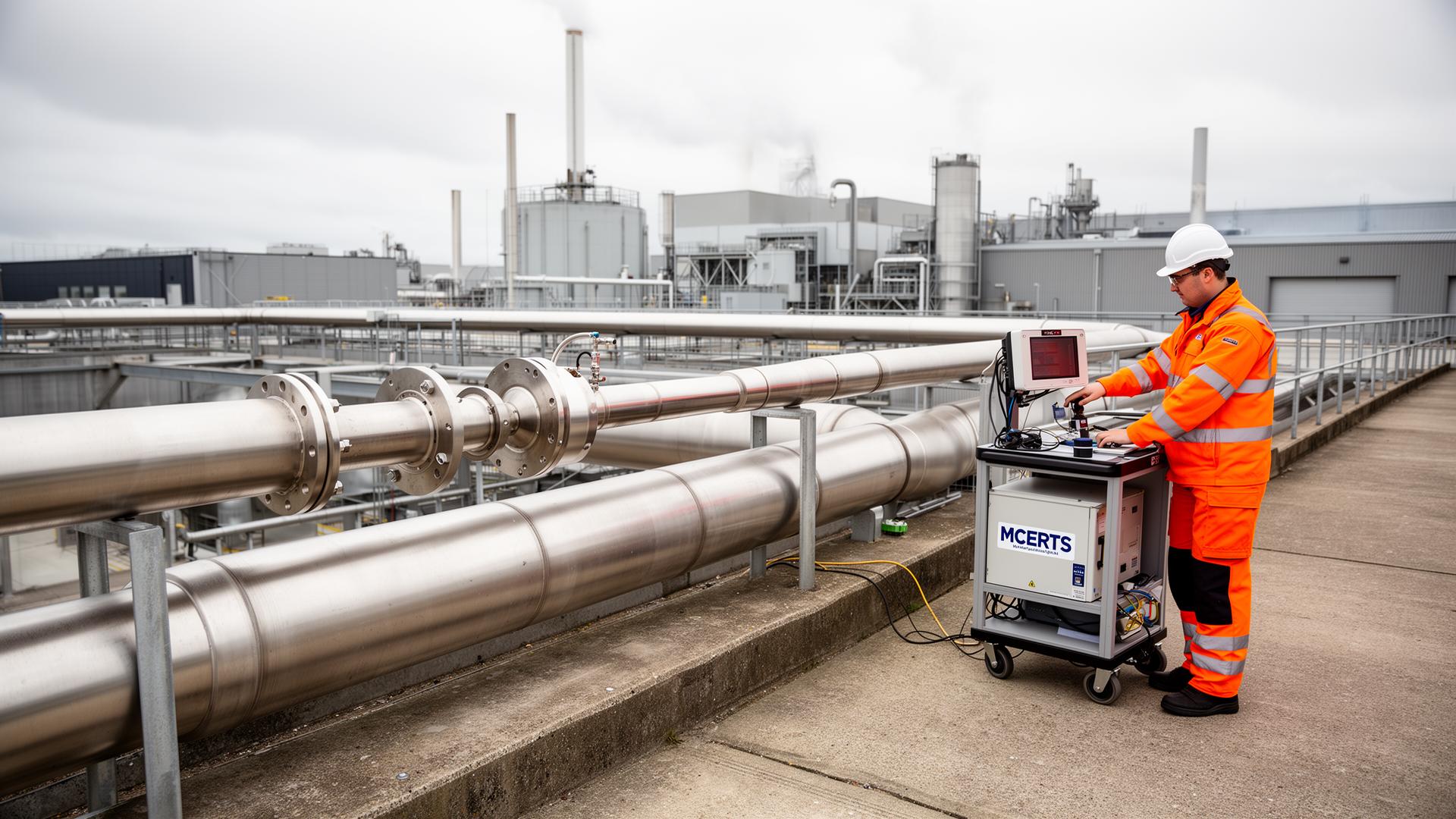
Our stack testing team carried out a sample point design review on the wider process duct system to identify an equivalent monitoring location that would give the same regulatory evidence without the work-at-height burden. We then recommended a relocated sample point in writing for the operator's engineering team.
Read case study

Need a Quote for Stack Testing Methods & Standards UK?

Add this service to your quote and submit a request. We'll review your scope and get back to you within 24 hours.

Step 2: Added everything you need? Review your basket and send your request.